

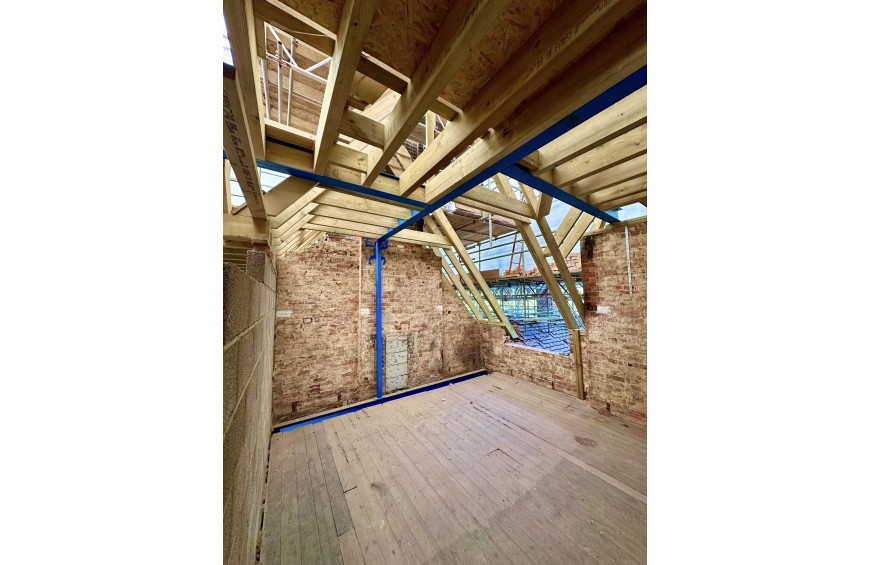
A loft conversion is one of the most value-adding home improvement projects available to UK homeowners—adding usable floor area without extending the building's footprint, typically at lower cost per square metre than a ground floor extension. But it is also one of the most structurally complex domestic alterations commonly undertaken. Almost every loft conversion requires steel, and in many cases requires more steel than the homeowner or builder anticipated at the outset. Getting the structural steelwork right—specified correctly, ordered at the right time, and installed in the right sequence—is one of the most important factors determining whether a loft conversion project runs smoothly or becomes expensive and protracted.
This guide is for homeowners planning a loft conversion and builders undertaking them. It explains why loft conversions require steel, describes the specific structural roles steel plays in different conversion types, clarifies the sequence of decisions and appointments needed before steel can be ordered, and addresses the practical questions that arise on site.
Why Almost Every Loft Conversion Needs Steel
The existing roof structure of a typical UK house was not designed to support a habitable floor. It was designed to carry its own weight, snow loads, wind loads, and nothing else. The ceiling joists below the roof—the timbers spanning between the top of the walls at ceiling level—are sized to carry only a lightweight plaster ceiling. They are almost never adequate to carry the imposed loads of a habitable room: furniture, people, storage, and the general live loads that Building Regulations require a floor to support.
Creating a habitable loft space therefore requires a new structural floor capable of carrying these loads. This new floor must span between the supporting walls of the house. Depending on the house width and the span involved, this may be achievable with larger timber joists—but for houses of typical UK semi-detached or terraced proportions (6-8 metres between external walls), timber alone is often insufficient, impractically deep, or both. Steel beams provide the spanning capability timber cannot, and do so in a structural depth that doesn't consume usable headroom.
Beyond the floor structure, loft conversions frequently require steel for roof alterations—raising ridge heights, creating dormer openings, removing rafter sections—and for the structural frame of dormer additions themselves. The steel requirement for a loft conversion is rarely limited to a single beam. Understanding the full scope of steelwork needed, and planning for it from the start, prevents the all-too-common situation where additional steel requirements emerge mid-project.
The Four Main Structural Roles of Steel in Loft Conversions
1. The Loft Floor: Steel Beams Supporting New Floor Joists
The most common and usually the most structurally significant steel in a loft conversion is the pair of beams that support the new floor structure. These beams—typically called loft floor beams, binder beams, or simply the loft beams—run along each side of the loft space, parallel to the ridge, at or near the level of the existing ceiling joists. New floor joists then span between these beams, creating the habitable floor.
The beams typically bear at each end on the party walls (in a mid-terrace or semi-detached house) or on the gable walls (in a detached house). They may also be supported by internal load-bearing walls below if the span would otherwise be excessive. The beams must carry the full floor loading: dead load from the floor structure itself plus imposed load from occupancy—typically 1.5 kN/m² imposed for a domestic bedroom, though this varies with use.
Beam sizing for loft floors is always a structural engineering calculation. Span, loading, deflection limits, and available structural depth all influence the required section. For a typical 7-metre span in a semi-detached house, loft floor beams commonly range from 203×102 UB23 to 254×102 UB25 or larger, depending on floor loading and structural arrangement. These are not rules—every project requires individual calculation. But they illustrate that loft beams are real structural sections, not the lightweight lintels sometimes assumed.
The depth of the beam matters practically as well as structurally. The beam must fit within the floor construction zone—below the new floor surface and above the existing ceiling below. In a typical Victorian or Edwardian terraced house with 2.4-2.5 metre ground floor ceiling heights, there is limited tolerance. The structural engineer must design the floor build-up to achieve adequate headroom in the loft (Building Regulations require 2.2 metres minimum at the centre of a habitable room) while keeping the floor construction depth within what the available storey height allows.
2. Spreader Beams: Distributing Load to Party Walls
In terraced and semi-detached houses, loft floor beams commonly bear on party walls. This introduces a structural consideration that doesn't exist for detached properties: the party wall is shared with the neighbour, and concentrating beam loads on it requires the wall to have adequate capacity—and the neighbour's agreement under the Party Wall Act.
Where a party wall has adequate capacity to accept concentrated beam bearing loads directly, standard bearing details with padstones apply. Where the wall is of lighter construction, where the loads are high, or where the structural arrangement requires it, a spreader beam or spreader plate may be introduced to distribute the loft beam reaction over a greater length of party wall, reducing the stress concentration.
In some structural arrangements, particularly where internal load-bearing walls below the loft will support the loft beams rather than or in addition to external walls, the load path from loft beam to foundation must be traced through the entire structure. Load must transfer through each storey to the foundations via walls or columns with adequate capacity. The structural engineer traces this load path and identifies any elements that need upgrading—which may include beams at lower floor levels or padstones at intermediate bearings.
3. Roof Structure Alterations: Hips, Ridges, and Rafter Trimming
Many loft conversions require alterations to the existing roof structure—not just adding a floor below it. The most common alterations are:
Hip-to-gable conversion. Hipped roofs (where the roof slopes on all four sides, including the end walls) provide less usable loft volume than gable-ended roofs (where the roof terminates in a vertical triangular wall at each end). Converting a hipped end to a gable—by building up the end wall vertically and restructuring the hip rafters into a gable end—significantly increases usable floor area. This typically requires a new steel or timber ridge beam and may require temporary support of the existing hip structure during conversion. Steel is commonly used for the new ridge or gable end framing where timber would be insufficiently stiff.
Ridge beam installation. When a loft conversion removes the collar ties or ceiling joists that were providing lateral restraint to the rafters (preventing the walls from spreading under roof load), the roof must be restructured with a ridge beam carrying rafter loads vertically rather than relying on collar-and-tie action. A structural ridge beam—often steel—is inserted along the ridge line, supported at each end on gable walls or structural supports. Rafters then bear on the ridge beam rather than pushing outward against the walls. This is a fundamental change to how the roof structure works and requires careful engineering.
Dormer openings. Where sections of rafters are removed to form dormer openings, the cut rafter ends must be supported and their loads redirected. Trimmer rafters, trimming beams, and header beams frame around the opening, carrying loads from the trimmed rafters to the adjacent intact rafters and down to the structure below. For large dormers or where rafter loads are significant, steel trimming sections may be required rather than timber.
4. Dormer Structural Frame
Full-width rear dormers—the most space-efficient dormer type, extending across most or all of the rear roof slope—require a structural frame forming the dormer cheeks (sides) and front face. For modest dormers, this frame may be entirely timber. For larger dormers, or where the dormer roof must carry additional loads (plant, green roof, terrace), a steel frame provides stiffness and load capacity that timber cannot.
Steel dormer frames typically consist of vertical columns at the dormer cheeks, a horizontal head beam spanning across the top of the dormer opening supporting the dormer roof structure, and diagonal or horizontal bracing providing racking resistance. The columns bear on the loft floor structure below, which must have adequate capacity for these additional column loads—another element the structural engineer must trace through the load path.
Where a rear dormer includes a Juliet balcony or flat roof terrace, the structural requirements increase substantially. Terrace loading (typically 1.5-4.5 kN/m² depending on use) is much higher than standard roof loading, and the structural frame must be designed accordingly. This typically means a more substantial steel frame with specifically designed connections.
Before You Order Any Steel: The Essential Sequence
The most common cause of problems in loft conversion steelwork is ordering steel too early—before the structural design is complete and the beam sizes confirmed. Steel ordered from a general estimate or from a previous similar project may be the wrong size, resulting in wasted material, project delay, and potentially structural non-compliance. The correct sequence is:
Step 1: Appoint an Architect or Architectural Technician
Unless you are an experienced self-builder with design knowledge, a loft conversion project typically benefits from architectural input at the design stage. An architect or architectural technician can advise on planning requirements (some loft conversions require planning permission, others are permitted development), optimise the layout and use of space, coordinate the input from other professionals, and produce the drawings needed for Building Regulations submission.
For simpler projects—a straightforward room-in-roof conversion without dormers on a standard house type—architectural input may be minimal. For complex conversions with dormers, hip-to-gable alterations, or unusual house geometry, professional design input is valuable.
Step 2: Appoint a Structural Engineer
A structural engineer is not optional for a loft conversion. Building Control will require structural calculations demonstrating that the new floor structure, roof alterations, and any new steelwork comply with Part A of the Building Regulations. These calculations must be prepared by a competent person—in practice, a qualified structural engineer (MIStructE or MICE).
The structural engineer assesses the existing structure, determines loads, designs the new floor and roof structure, specifies all steel sections with full dimensions and grades, designs bearing details and padstones, and prepares the calculation package for Building Control. The beam specifications that come from this process—section sizes, lengths, grades, bearing requirements—are what you order from your steel supplier.
Do not order steel before receiving the structural engineer's specification. Common beam sizes from previous projects are not a substitute for project-specific calculations. A beam that works in one house may be inadequate or unnecessarily heavy in another with slightly different dimensions, loading, or structural conditions.
Engineering fees for a standard loft conversion structural package typically range from £500 to £1,500 depending on complexity. This is a small fraction of total project cost and the foundation on which everything else depends.
Step 3: Submit Building Regulations Application
Submit a Full Plans application to Building Control—either local authority Building Control or a private Approved Inspector—including the architect's drawings and the structural engineer's calculations. Allow five to eight weeks for approval, though some authorities turn around faster and pre-application discussions can accelerate the formal process.
Full Plans approval confirms your structural design is compliant before work commences. This gives you certainty that the beam sizes are correct and the design is approved—reducing the risk of required changes after steel has been ordered and potentially cut.
Step 4: Serve Party Wall Notices (if applicable)
If your loft floor beams will bear on or into a party wall, or if the conversion involves work to the party wall structure, the Party Wall etc. Act 1996 requires you to serve a Party Wall Notice on adjoining owners before commencing the notifiable work. The statutory response period is 14 days, after which a dispute may be declared requiring Party Wall surveyors to be appointed and an Award prepared—a process that can take several weeks.
Serve Party Wall Notices early—ideally at the same time as submitting the Building Regulations application—to avoid the Party Wall process becoming the critical path delaying your project start.
Step 5: Order Steel
With Building Regulations approval (or confirmation that your application is proceeding) and Party Wall notices served, you can order steel. Provide the supplier with the structural engineer's specification: section designation, length, steel grade (S275 or S355 as specified), surface preparation, and quantity for each beam. Include bearing plates, padstones (if steel), connection angles, and any other fabricated components specified.
Standard structural sections are typically available for delivery within three to seven working days from a UK stockholder. If fabrication is required—end plates, drilled holes, notched ends, or welded assemblies—allow additional lead time: typically one to three weeks depending on the fabricator's workload and the complexity of the work.
Plan your steel delivery to coincide with the point in your construction programme when the beams are needed. Beams delivered too early create storage problems on site and potential damage. Beams arriving late delay the critical structural phase and cascade into programme overruns throughout the project.
Practical Site Considerations for Loft Conversion Steelwork
Getting Steel into the Loft
Loft conversion beams must be physically moved from street level to loft level and manoeuvred into position. This is more challenging than it sounds for larger sections. A 7-metre 254×102 UB25 beam weighs approximately 175kg—not something two people can manhandle up a domestic staircase.
Common approaches to lifting loft beams include:
Crane or HIAB lift. A mobile crane or lorry-mounted HIAB (hydraulic knuckle-boom crane) can lift beams over the roof and lower them through a temporary opening in the roof covering. This is efficient for multiple beams and avoids internal access difficulties. It requires advance planning (crane booking, road space if needed, scaffold to receive beams at roof level), adds cost (typically £300-£600 for a HIAB lift), and requires coordination with the roofing sequence.
Scaffold gantry. Where scaffold is already required (as it typically is for roof work), a beam attached to the scaffold at roof level and walked along the scaffold boards into position through a roof opening is a lower-tech alternative. Feasible for beams up to about 100-120kg; heavier beams require mechanical assistance.
Internal route. For shorter beams or where crane access is not available, beams may be brought in through the front door, up the stairs with temporary tread protection, and through the loft hatch. This requires the beam to negotiate stair geometry—curved stairs, landings, and low ceilings all create constraints. Maximum manageable length for internal manoeuvring is typically 4-5 metres depending on house layout.
Discuss the access approach with your builder or contractor before ordering steel. In some cases, the access constraints affect beam specification—for example, where a single 7-metre beam cannot be manoeuvred internally, the structural engineer may be able to design a two-piece solution with a structural splice at mid-span, allowing two shorter beams to be brought in separately and joined on site. This adds fabrication cost and complexity but may be the only practical option for some properties.
Temporary Propping During Installation
Installing loft floor beams almost always requires temporary propping of the structure above while the permanent steelwork is installed. The existing ceiling joists being replaced (or supplemented) are load-bearing during the build process—they carry the weight of roofing materials, any water tanks, and construction loads. Before they can be removed or cut, temporary acrow props must support the structure above.
The structural engineer's temporary works notes or method statement will specify the propping arrangement. Follow it precisely—incorrect propping causes partial or complete structural collapse during construction, which is both dangerous and expensive. Do not remove existing structural elements before the temporary propping is in place and the permanent steel is installed and bearing correctly.
Water Tank Relocation
Many UK houses built before the 1990s have cold water storage tanks in the loft—typically large plastic or galvanised steel tanks sitting on timber platforms across the ceiling joists. These tanks are heavy: a full 225-litre tank weighs approximately 225kg, and older properties may have larger tanks.
The new loft floor structure changes the structural arrangement, and the existing tank platform may no longer be structurally adequate or appropriately located. More practically, the tank occupies valuable loft space. Most loft conversions involve relocating the cold water tank to a smaller pressurised system or mains-pressure combination boiler, eliminating the tank entirely. This is worth discussing with your plumber at the earliest design stage—the structural implications of tank location and weight must be included in the structural engineer's calculations if any tank is to be retained.
Notching and Trimming for Services
Loft conversions require routing services—electrical cables, plumbing, ventilation ducts—through and around the new floor structure. In timber construction, joists can be notched (within strict limits) for cables and pipes. Steel beams cannot be notched or drilled without engineering approval—holes in steel beams affect their structural capacity and must be specifically designed.
If penetrations through steel beams are required for services, inform your structural engineer at the design stage. Engineers can design specific openings (typically circular holes in the web within defined size and location limits) that are structurally acceptable. Unauthorised cutting or drilling of steel beams on site is a structural defect and a Building Regulations compliance issue.
Building Control Inspections: What to Expect
Loft conversion projects typically require multiple Building Control inspections. For the structural steelwork specifically, the critical inspection is the structural frame inspection—when all steelwork is installed and before it is encased. The inspector will check beam sizes match specifications, bearing lengths and padstones are correct, and connections comply with the approved drawings. Do not encase steelwork before this inspection.
Additional inspections will cover foundations (if any new foundations are required), fire protection of the escape route (staircase enclosure and fire doors are requirements for loft conversions providing a new storey), insulation, and final completion. Plan your construction programme to allow inspection time at each stage—last-minute inspection requests that hold up programme are avoidable with forward planning.
Common Mistakes in Loft Conversion Steelwork
Drawing on the typical issues that arise in loft conversion projects, the following mistakes appear consistently enough to be worth explicitly flagging:
Underestimating the number of beams required. Builders and homeowners often focus on the two main loft floor beams and overlook the additional steel that roof alterations, dormer construction, hip-to-gable work, or structural load redistribution require. The structural engineer's drawings are the definitive source—order everything specified, not just the most obvious elements.
Ordering before the engineer's specification is received. As discussed above, this is the most common source of wrong beam size. No exception to this rule is worth the risk of having to return steel and reorder.
Ignoring load path implications for lower floors. The loads introduced by a new loft floor must travel through the structure to the foundations. Existing walls, beams, and floors on lower storeys may need assessment—particularly in older properties where floor beams at first floor level were not designed for the additional load now being imposed from above. A structural engineer who scopes only the loft level without tracing load paths to foundations is not providing complete advice.
Forgetting Party Wall notices until late in the programme. The Party Wall process has statutory timescales that cannot be compressed. Starting the process late can delay project commencement by weeks. Serve notices as early as possible.
Inadequate temporary propping. Rushing the structural installation sequence without proper temporary works in place risks structural incidents during construction. Follow the structural engineer's temporary works guidance and do not improvise.
Assuming permitted development means no approvals are needed. Permitted development status relates to planning permission only. Building Regulations approval, Party Wall notices, and all the other approvals discussed here apply regardless of planning status. Permitted development does not mean build without oversight.
How Much Steel Does a Typical Loft Conversion Need?
As a rough orientation—not a substitute for project-specific engineering—a typical room-in-roof conversion on a standard UK semi-detached house involves:
- Two loft floor beams spanning the width of the house (6-8 metres each), typically in the 178-254mm depth range
- Possibly a ridge beam if the roof structure requires it (length depends on house depth, section size depends on rafter loads)
- Trimmer sections around any dormer openings if a dormer is included
- Bearing plates or padstones at each beam bearing point
- Connection angles or cleats if beams connect to each other
A hip-to-gable conversion adds steelwork for the new gable framing. A full-width rear dormer adds the dormer frame steel. A conversion on a detached house with longer spans needs larger sections. A conversion incorporating a terrace needs heavier structural frames. Each variation adds to the steel package—which is why the structural engineer's drawings, not general estimates, are the only reliable basis for ordering.
Conclusion: Plan the Steel Early, Order It Right
Structural steelwork is on the critical path of any loft conversion. The beams must be designed, approved, ordered, delivered, and installed before the floor can be laid, the roof can be altered, and the conversion can progress. Delays or errors in the steel package cascade through the entire programme. Getting ahead of this—appointing the structural engineer early, obtaining Building Regulations approval before ordering, and providing your steel supplier with a complete specification—is the single most effective way to keep a loft conversion project on time and on budget.
Pratley's Builders Beams supplies structural steel to builders and contractors across the South of England, including the universal beams, universal columns, flat plate, and angles commonly required for loft conversion projects. We work from structural engineers' specifications and can supply standard sections with short lead times. If you're at the steel ordering stage of a loft conversion and have a specification from your structural engineer, contact us to discuss your requirements and we'll get you priced and scheduled promptly.

Submit comment Cancel Reply