

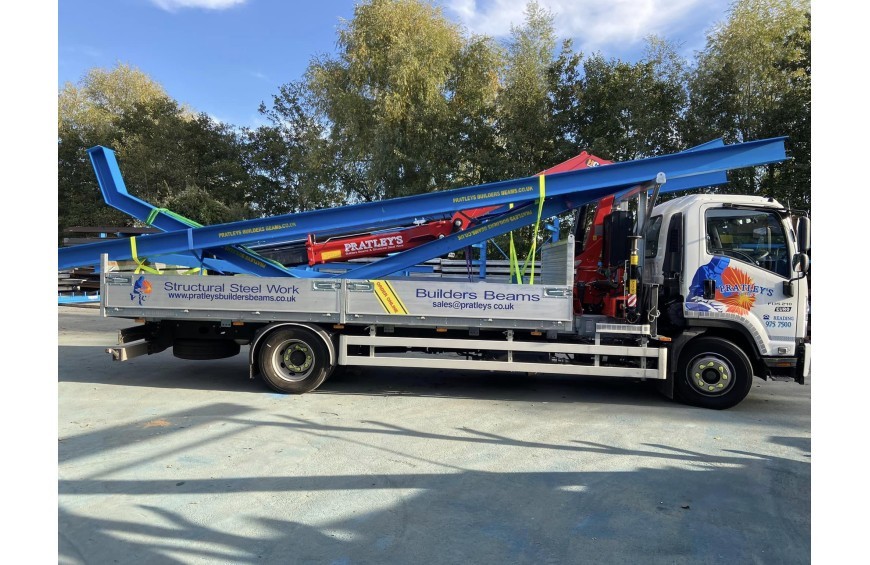
When planning a home extension, garage conversion, or loft transformation, one of the most important decisions you'll make is choosing structural materials that will safely support your new space for decades to come. While timber beams, concrete, and engineered wood products all have their place in modern construction, structural steel remains the overwhelming choice for UK home extensions—and for very good reasons.
This comprehensive guide explains why steel continues to dominate domestic structural applications, exploring the material properties, practical benefits, regulatory advantages, and long-term performance characteristics that make steel the most reliable choice for extending and renovating UK homes.
The Fundamental Strength Advantage
Steel's exceptional strength-to-weight ratio is the foundation of its dominance in structural applications, providing capabilities that alternative materials simply cannot match.
Understanding Structural Capacity
Steel can safely carry loads approximately 10 to 15 times greater than equivalent timber sections of the same size. A 203mm deep steel beam might safely span 5 meters carrying upper floor loads, while a timber beam of similar depth would struggle to span 3 meters with the same loading.
This strength advantage means steel beams remain relatively compact even when supporting substantial loads. Your 200mm deep steel beam supporting your new extension's upper floor might weigh 150kg but carry loads exceeding 10 tonnes. Achieving equivalent capacity with timber would require much deeper, heavier sections that consume more headroom and cost considerably more.
The tensile strength of structural steel (S275 grade commonly used in UK construction) reaches 275 Newtons per square millimeter—roughly five times stronger than typical structural timber. This strength manifests in thinner, lighter sections that provide identical or superior performance compared to bulkier alternatives.
Spanning Greater Distances
Open-plan living spaces demand long structural spans with minimal intermediate supports. Steel enables these modern design preferences by bridging distances that would require multiple supporting columns if using timber or masonry.
A typical rear extension removing a ground floor wall to create open-plan kitchen-dining areas might require a 5-6 meter span. Steel beams handle this straightforwardly with standard sections. Timber would need substantial glued-laminated (glulam) beams that cost more, take longer to source, and still may not achieve the same compact profile.
Loft conversions particularly benefit from steel's spanning capabilities. Converting roof spaces often requires removing walls that previously supported roof structures, necessitating long-span beams. Steel economically bridges these spans while maintaining adequate headroom in already space-constrained loft areas.
Load Concentration Management
Home extensions concentrate significant loads at specific points—where new upper floors bear onto beams, where roof structures transfer loads to walls, or where heavy fixtures like bathtubs require support. Steel handles these concentrated loads better than most alternatives.
Point loads that might split or crush timber cause no concern for properly specified steel sections. The uniform, predictable material properties mean structural engineers can calculate exact capacities with confidence, ensuring steel safely carries design loads with appropriate safety margins.
Dimensional Stability and Predictable Performance
Unlike organic materials that change size with moisture content or engineered products with variable properties, steel provides dimensional stability and predictable performance that simplifies construction and ensures long-term structural integrity.
No Moisture-Related Movement
Timber expands and contracts significantly with changes in moisture content. A timber beam in a damp basement might swell by several millimeters, while the same beam in a heated house shrinks as it dries. This movement creates gaps around joinery, cracks in finishes, and can even affect structural performance.
Steel's dimensional stability eliminates these concerns. Once installed, steel beams maintain their size regardless of humidity, temperature, or seasonal changes. Finishes attached to steel structures remain stable without gaps or cracks from supporting structure movement.
This stability matters particularly for extensions with large glazed areas. Steel supporting expansive sliding doors or curtain walls must remain perfectly straight and dimensionally stable—any movement causes doors to bind or glazing seals to fail. Steel's stability ensures these sensitive applications work properly long-term.
Resistance to Deflection
All structural members deflect (bend slightly) under load. Excessive deflection causes problems including cracked plaster, binding doors, and visual sagging. Building Regulations limit permissible deflection to ensure acceptable performance.
Steel's stiffness (measured as elastic modulus) is approximately 15 times greater than timber. This means steel beams deflect less under equivalent loads, maintaining flat ceilings and preventing the damage that excessive movement causes.
For floors supporting brittle finishes like tiles, minimizing deflection is critical. Tiles crack when supporting floors deflect excessively. Steel's inherent stiffness helps ensure floor systems remain rigid enough for even the most sensitive finishes.
Consistent Material Properties
Every piece of structural steel from reputable suppliers meets specified minimum strengths and properties. When your structural engineer specifies S275 steel, they know exactly what material properties to expect, allowing precise, confident calculations.
Timber properties vary substantially between pieces depending on species, growth conditions, defects, and moisture content. Engineers must apply larger safety factors when designing timber structures to account for this variability, often resulting in larger, more expensive sections than steel requires.
Engineered timber products like glulam offer more consistency than solid timber but still don't match steel's predictability. Manufacturing variations, adhesive performance, and moisture sensitivity all introduce variables that steel simply doesn't have.
Fire Performance and Building Regulations Compliance
Fire safety is paramount in building design, and steel's fire performance characteristics—combined with modern fire protection technologies—make it exceptionally suitable for domestic extensions.
Understanding Steel's Fire Behavior
Unprotected steel begins losing strength when heated above approximately 400°C, with significant strength reduction by 550-600°C. This temperature-related strength loss might seem concerning, but modern fire engineering and protection methods address it effectively.
Importantly, steel is non-combustible. Unlike timber that fuels fires and generates smoke, steel doesn't burn, produce toxic fumes, or contribute to fire spread. This fundamental difference affects how Building Regulations treat steel versus combustible alternatives.
Fire protection coatings—primarily intumescent paints—insulate steel during fires, keeping temperatures below critical thresholds. These coatings expand when heated, creating insulating layers that maintain steel strength for specified periods (typically 30, 60, or 90 minutes depending on building requirements).
Regulatory Requirements
Building Regulations Part B addresses fire safety, specifying structural element fire resistance based on building height, use, and escape provisions. Many residential extensions require 30-minute fire resistance for structural members, while larger or multi-story extensions may require 60 or 90 minutes.
Steel with appropriate intumescent coatings readily achieves these requirements. The coating thickness determines protection period—thicker coatings provide longer protection. Standard coating specifications are well-established, making Building Control approval straightforward.
Timber structures face more complex regulatory challenges. Solid timber can achieve fire ratings through its charring behavior, but engineered timber products may require additional protection. The combustible nature of timber also affects separation distances, fire compartmentation, and other regulatory requirements.
Post-Fire Performance
After fires, steel structure assessment is relatively straightforward. If fire protection performed correctly, steel maintains its properties and often requires no replacement. Heat damage can be evaluated through testing, allowing informed decisions about retention versus replacement.
Timber exposed to fire—even if structural collapse didn't occur—typically requires complete replacement. Charring damages structural capacity, and residual strength is difficult to assess reliably. The combustible nature means timber contributes to fire damage beyond pure structural concerns.
Lifespan and Durability
Home extensions represent substantial investments that should last for generations. Steel's longevity and resistance to various degradation mechanisms ensure extensions remain structurally sound throughout buildings' lifespans.
Resistance to Biological Attack
Timber faces constant threats from wood-boring insects, fungal decay, and bacterial attack. Woodworm, death watch beetle, and various fungi can severely damage timber structures, requiring expensive treatment or replacement. Prevention requires chemical treatments, moisture control, and ongoing vigilance.
Steel is immune to biological attack. Insects cannot bore through it, fungi cannot decay it, and bacteria have no effect on it. This immunity eliminates entire categories of structural problems that affect timber buildings, particularly in damp conditions or older properties.
This biological resistance particularly benefits extensions to period properties where existing insect or fungal problems exist. Steel structures won't spread infestations or fall victim to issues affecting surrounding timber, maintaining their integrity even in compromised buildings.
Corrosion Protection
Steel's primary durability concern is corrosion from moisture exposure. However, modern protection methods effectively prevent corrosion for decades, ensuring steel structures outlast typical building lifespans.
Interior steel beams with proper protective coatings (shot blasting and suitable primer) face minimal corrosion risk in typical domestic environments. The coatings prevent moisture contact, and dry internal conditions aren't conducive to corrosion even if coatings are locally damaged.
External steelwork or components in damp environments benefit from hot-dip galvanizing—immersion in molten zinc creating metallurgically bonded coatings providing 40-60 years of maintenance-free protection. Many Victorian and Edwardian buildings contain original steel components still performing perfectly after 100+ years, demonstrating steel's potential longevity.
Structural Stability Over Time
Steel maintains its strength indefinitely when properly protected. A 50-year-old steel beam in good condition provides identical structural capacity to newly fabricated beams. Compare this to timber that weakens gradually through moisture cycling, minor insect damage, and general degradation over decades.
This long-term stability means building alterations and renovations decades after original construction can rely on steel structures performing as originally designed. Future owners can add conservatories, install heavier roofing materials, or make other changes with confidence that existing steel remains fully capable.
Design Flexibility and Architectural Adaptability
Modern architectural preferences emphasizing open-plan living, large glazed areas, and flexible spaces all demand structural solutions that steel provides better than alternatives.
Minimal Visual Impact
Steel's strength allows compact sections that minimize visual intrusion. Where timber beams might project 300-400mm below ceilings, equivalent steel sections might project only 200-250mm. This reduced depth preserves ceiling heights and creates less obtrusive structural elements.
For open-plan designs where structural beams remain visible, steel's clean lines and compact profiles integrate well with contemporary aesthetics. Steel can be left exposed, boxed in neatly, or incorporated into design features without dominating spaces the way bulkier timber beams might.
Integration with Other Materials
Steel connections accommodate diverse materials and building systems effectively. Steel brackets can support timber joists, stone cladding, glass balustrades, or concrete floors with equal facility. This versatility simplifies complex designs mixing materials.
Timber-to-timber connections require careful carpentry and can weaken timber sections. Steel connections using bolts or welds provide stronger, more reliable joints that don't compromise structural capacity the way notches and cuts in timber do.
Future Modification Ease
Homeowner needs change over time, and structures that accommodate future modifications provide lasting value. Steel structures generally accept modifications more readily than timber alternatives.
Adding new openings, relocating partitions, or upgrading services often requires penetrating or cutting existing structures. Steel beams can accommodate service penetrations (with engineering approval) more readily than timber, and can be strengthened through welded reinforcement if needed.
Timber beams, once cut or notched, permanently lose capacity that cannot be easily restored. The organic nature and connection methods make modification and strengthening more complex than comparable steel modifications.
Cost-Effectiveness Across Project Lifecycles
While initial material costs sometimes favor timber, comprehensive lifecycle analysis typically demonstrates steel's superior cost-effectiveness for home extensions.
Installed Cost Comparisons
For straightforward residential extensions, steel beam material costs approximately £800-£1,500 for typical 5-6 meter spans after fabrication. Equivalent performance timber or engineered wood products cost £600-£1,200 depending on specification.
However, steel's compact size simplifies installation—less headroom loss means less foundation depth, shorter wall heights, and reduced overall building volume. These indirect savings often offset steel's material premium.
Steel's predictable dimensions and properties also reduce on-site fitting and adjustment time. Timber beams may require planing, packing, or adjustment to achieve specified levels and alignments. Steel arrives precisely fabricated and installs quickly.
Maintenance and Longevity Value
Steel's durability and maintenance-free nature provide lifecycle cost advantages. Properly protected steel requires no maintenance for decades, while timber may need periodic treatment, inspection for insect damage, or eventual replacement.
The initial cost difference between steel and timber—perhaps £200-£500 for a typical residential extension beam—becomes negligible when amortized over 50+ year lifespans. Steel's reliability eliminates worry about structural adequacy that timber building owners sometimes face.
Insurance and Warranty Considerations
Some home insurers view steel-framed extensions more favorably than timber alternatives, potentially affecting premiums. Steel's non-combustible nature and resistance to biological attack reduce certain risk categories that concern insurers.
Warranties and guarantees on steel fabrication typically cover defects for extended periods. Many fabricators offer 10-25 year warranties on galvanized steelwork. Timber warranties tend to be shorter and may include numerous exclusions for moisture damage or biological attack.
Environmental Considerations in Modern Context
Environmental impact increasingly influences building material choices. Steel's environmental profile, while complex, demonstrates advantages that many assume belong exclusively to timber.
Recyclability and Circular Economy
Steel is endlessly recyclable without quality degradation. Structural steel from demolished buildings returns to mills where it's remelted and remanufactured into new sections identical in quality to virgin steel. Current UK structural steel contains approximately 90-95% recycled content.
This recyclability means steel from your extension could be recycled indefinitely, continuously circulating through the economy rather than becoming waste. Compare this to timber that typically ends its structural life as low-grade chipboard or fuel.
Embodied Carbon Considerations
Steel production is energy-intensive, resulting in significant embodied carbon (approximately 1.0-1.5 tonnes CO₂ equivalent per tonne of steel). However, this must be balanced against steel's superior performance allowing less material to achieve equivalent structural capacity.
A steel beam weighing 150kg might replace a timber beam weighing 300kg. The embodied carbon comparison becomes less clear when accounting for the actual material quantities required for equivalent performance.
Modern steel production increasingly uses electric arc furnaces powered by renewable electricity, dramatically reducing production emissions. UK steel's embodied carbon has decreased approximately 50% over the past 30 years and continues improving.
Longevity and Resource Efficiency
Using materials that last centuries without replacement represents the ultimate environmental benefit. Steel's durability means resources invested in your extension's structure continue providing value indefinitely rather than requiring periodic replacement.
Timber's vulnerability to moisture, insects, and decay means structural replacement may be necessary after 50-100 years depending on conditions. This replacement requires new materials, creating additional environmental impact. Steel maintained properly lasts indefinitely.
Practical Project Advantages
Beyond material properties and long-term performance, steel provides practical advantages that simplify construction and reduce project risks.
Supply Chain Reliability
Steel availability in the UK is excellent. Standard sections are manufactured domestically and stocked widely by distributors and fabricators. Lead times of 10-15 working days from order to delivery are typical for residential projects.
Engineered timber products like glulam often require longer lead times, particularly for larger sections or during busy construction periods. Supply interruptions or manufacturing delays more frequently affect timber than steel supplies.
Quality Assurance and Certification
Steel fabrication operates under comprehensive quality standards (EN 1090) ensuring consistent quality and material traceability. Material certificates document steel grades and properties, providing Building Control with necessary assurance.
Timber grading and quality control, while improving, remain less stringent than steel standards. Variability between suppliers and pieces complicates quality assurance and can create approval challenges.
Weather Resistance During Construction
Construction schedules don't accommodate weather preferences, and extension sites remain exposed during structural work. Steel withstands temporary weather exposure far better than timber.
Steel beams can be stored on site through wet weather without degradation (beyond superficial rust that doesn't affect structural capacity). Timber exposed to rain absorbs moisture that affects dimensions, promotes fungal growth, and may require drying before installation proceeds.
Building Control Familiarity
Building Control officers inspect thousands of steel-framed extensions annually. They understand steel's properties, standard details, and typical applications thoroughly. This familiarity streamlines approval processes.
Less common solutions like timber or hybrid systems may face additional scrutiny or questions during approval, potentially extending timelines. Steel's ubiquity in residential construction means officers know exactly what to expect and inspect.
When Steel Is the Obvious Choice
Certain extension scenarios particularly favor steel, making it the clear material preference.
Load-Bearing Wall Removal
Creating open-plan spaces by removing internal load-bearing walls requires substantial beams carrying redistributed loads. Steel handles these concentrated loads in compact sections that maintain ceiling heights and integrate discreetly.
A 5-meter span supporting upper floor loads across a removed wall typically uses a 254×146 or 305×165 universal beam—relatively compact sections easily accommodated within ceiling depths. Achieving equivalent capacity with timber requires significantly deeper sections consuming valuable headroom.
Two-Storey Extensions
Multi-story extensions experience higher loads and require more robust structures than single-storey additions. Steel's strength-to-weight ratio shines in these applications, supporting upper floors and roof loads in efficient, economical sections.
The additional weight and depth of equivalent timber structures creates cascading effects requiring stronger foundations, taller walls, and more complex overall construction. Steel's compact sections simplify two-storey extension design and construction.
Large Glazed Openings
Bifold doors, sliding glass walls, and other large glazed openings require rigid support that prevents deflection. Even minor movement binds sliding mechanisms or cracks glass. Steel's stiffness ensures glazed openings operate smoothly decades after installation.
Timber's greater susceptibility to deflection and dimensional changes makes it less suitable for supporting sensitive glazing systems. The risks of binding, seal failure, or glass damage favor steel's dimensional stability.
Loft Conversions
Converting roof spaces requires maintaining every possible millimeter of headroom in already constrained areas. Steel's compact sections preserve precious headroom while safely carrying floor and roof loads.
The 150-200mm beam depths typical in steel loft conversions might become 250-350mm with timber equivalents. In lofts where 2.2-2.4 meters represents absolute maximum height, this difference determines project feasibility.
Period Property Extensions
Extending listed buildings or properties in conservation areas requires sensitivity to existing structures while meeting modern Building Regulations. Steel's non-combustible nature, compact size, and long-term durability make it particularly suitable.
Steel structures won't contribute to or spread existing timber problems like insect infestation or fungal decay common in period buildings. This isolation protects both new extensions and existing structures.
Conclusion: Steel's Enduring Dominance
Structural steel has dominated UK home extension construction for over a century, and this dominance shows no signs of diminishing. The material's exceptional strength-to-weight ratio, dimensional stability, fire performance, durability, and design flexibility provide advantages that alternative materials cannot collectively match.
While timber, concrete, and engineered products all have appropriate applications, steel remains the first choice for the vast majority of domestic structural situations. Its reliability spans both immediate construction practicality—quick availability, straightforward installation, Building Control familiarity—and long-term performance delivering decades of maintenance-free structural service.
For homeowners and builders planning extensions, renovations, or conversions, steel provides confidence that structural components will safely support buildings throughout their lifespans. The material's proven track record, regulatory acceptance, and practical advantages make it the obvious choice for creating the open, flexible, durable living spaces that modern homes require.
When you're investing substantial sums extending your home, choosing structural materials you can trust for generations makes obvious sense. Steel's continuing dominance in UK home extensions isn't tradition or inertia—it's the result of genuine, substantial advantages that remain as relevant today as when steel first revolutionized construction over a century ago.
Your extension deserves structural components that will reliably support your home for as long as you and future generations occupy it. Steel delivers this reliability more consistently, economically, and practically than any alternative material available to UK homeowners and builders today.

Submit comment Cancel Reply