

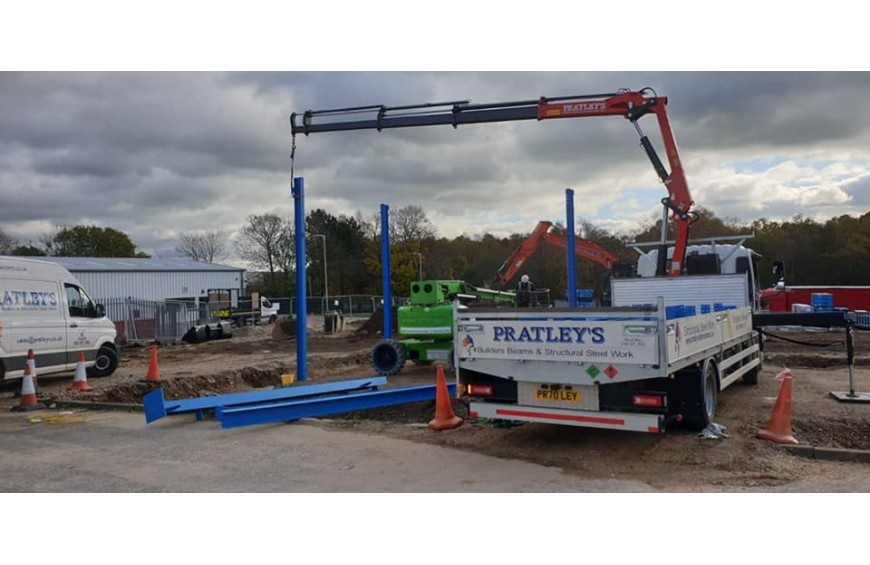
Whether you're planning a home extension, building a new property, or managing a commercial construction project, you'll likely encounter steel fabrication at some point. But what exactly does steel fabrication involve, and why does it matter for your building project? This straightforward guide explains the steel fabrication process, from raw materials to finished structural components ready for installation.
Steel Fabrication: The Basic Definition
Steel fabrication is the process of transforming raw steel materials into finished components ready for use in construction projects. This involves cutting, shaping, welding, and finishing steel to precise specifications, creating everything from structural beams and columns to staircases, handrails, and custom metalwork.
Think of steel fabrication as similar to carpentry, but working with metal instead of wood. Just as carpenters cut timber to size, join pieces together, and create finished products, steel fabricators cut steel sections, weld components together, and prepare structural elements for installation on building sites.
The key difference is that steel fabrication requires specialized equipment, technical knowledge, and safety procedures that go far beyond basic DIY capabilities. The high temperatures involved in cutting and welding, the weight and strength of steel materials, and the structural importance of fabricated components all demand professional expertise.
Why Steel Fabrication Matters for Building Projects
Understanding steel fabrication helps you appreciate what happens between ordering steel components and seeing them installed on your project site.
Structural Integrity
Most modern buildings rely on steel frameworks for structural support. Load-bearing beams, columns, and joists must be fabricated to exact specifications to safely carry the loads they'll support. Poor fabrication can compromise structural integrity with potentially catastrophic consequences.
Professional steel fabricators work to engineering drawings and building regulations, ensuring every component meets the required strength and safety standards. This precision fabrication protects building occupants and satisfies Building Control requirements.
Custom Solutions
Off-the-shelf steel sections rarely fit project requirements perfectly. Buildings have unique dimensions, load requirements, and architectural features that demand custom fabrication. Steel fabricators create bespoke components that match your specific project needs, from straightforward beams cut to length to complex structural assemblies.
Time and Cost Efficiency
Having steel fabricated off-site in controlled workshop conditions is faster and more cost-effective than attempting on-site modifications. Fabricators work from detailed drawings, prepare components in advance, and deliver finished pieces ready for quick installation. This approach minimizes on-site construction time and reduces labor costs.
Quality and Consistency
Workshop fabrication provides controlled conditions where quality can be assured. Proper lighting, stable working surfaces, and access to all necessary equipment means fabricators produce consistent, high-quality work that meets specifications every time.
The Main Steel Fabrication Processes
Steel fabrication involves several distinct processes, each serving specific purposes in creating finished structural components.
Cutting
Cutting is often the first step in steel fabrication, reducing raw steel stock to the required sizes and shapes.
Sawing uses specialized metal-cutting band saws or circular saws with abrasive or carbide-tipped blades. This method works well for straight cuts through beams, columns, and flat steel sections, providing clean, square cuts at precise lengths.
Flame cutting (oxy-fuel cutting) uses a high-temperature flame from burning oxygen and fuel gas to melt through steel. This process handles thick steel sections and can cut curves or complex shapes. Flame cutting is particularly useful for preparing large structural components or creating custom profiles.
Plasma cutting directs an electrically conductive gas through a plasma torch, creating extremely high temperatures that melt steel. This process offers faster cutting speeds than flame cutting and works well for stainless steel and aluminum as well as mild steel.
Laser cutting uses focused laser beams to cut steel with exceptional precision. While typically used for thinner materials and intricate patterns, laser cutting provides the cleanest edges and tightest tolerances of any cutting method.
The choice of cutting method depends on material thickness, required precision, production volume, and the complexity of shapes needed. Structural beams for building projects typically use sawing or flame cutting, while decorative metalwork might employ plasma or laser cutting.
Drilling and Hole Preparation
Creating holes in steel components is essential for bolting connections, service penetrations, and attachment points.
Magnetic drill presses clamp magnetically to steel surfaces, allowing precise hole drilling in beams, plates, and structural sections. These portable drills are invaluable for fabricating large components that can't fit under stationary drill presses.
Radial arm drills feature movable drill heads on horizontal arms, accommodating very large steel pieces while maintaining drilling precision. Fabrication workshops use these machines for drilling holes in long beams or wide plates where accuracy is critical.
CNC drilling machines automatically drill multiple holes according to programmed coordinates, ensuring perfect positioning and consistency across multiple identical components. This automation is particularly valuable for repetitive work or complex hole patterns.
Hole sizes, positions, and edge distances must comply with structural engineering specifications and British Standards. Incorrectly positioned or sized holes can weaken structural members or prevent proper connection assembly on site.
Welding
Welding joins steel components by melting and fusing the base materials, with or without additional filler metal. This process creates permanent connections that are integral to fabricated steel structures.
MIG welding (Metal Inert Gas) uses a continuously fed wire electrode and inert gas shield, providing fast, clean welds suitable for most structural steel fabrication. This versatile process works well for various thicknesses and positions.
TIG welding (Tungsten Inert Gas) offers exceptional control and produces extremely clean, precise welds. While slower than MIG welding, TIG is preferred for critical structural connections, stainless steel work, and applications where weld appearance matters.
Arc welding (stick welding) uses consumable electrodes and works well for outdoor or site conditions. While producing more spatter than MIG or TIG welding, arc welding remains valuable for certain structural applications and repair work.
Flux-cored arc welding uses tubular wire filled with flux, combining advantages of MIG and arc welding. This process works well for thick structural steel sections and provides good penetration for strong welds.
Qualified welders must hold appropriate certifications for the work they perform. Structural welding requires welders coded to BS EN ISO 9606 standards, ensuring they can produce welds that meet structural strength requirements.
Surface Preparation and Finishing
Steel surfaces require preparation before painting or galvanizing to ensure coatings adhere properly and provide lasting protection.
Shot blasting propels small steel shot at high velocity against steel surfaces, removing mill scale, rust, and contaminants while creating an ideal surface profile for coating adhesion. This process is standard preparation for structural steelwork before painting or galvanizing.
Grinding removes weld spatter, smooths rough edges, and prepares surfaces where smooth finishes are required. Angle grinders with various discs handle different grinding tasks from heavy material removal to fine surface finishing.
Priming and painting protects steel from corrosion and provides desired aesthetics. Structural steelwork typically receives intumescent paint (fire protection), anti-corrosive primers, and finish coats specified by the project requirements.
Hot-dip galvanizing immerses steel components in molten zinc, creating a metallurgically bonded coating that provides decades of corrosion protection. This process is particularly common for outdoor steelwork, agricultural buildings, and structures in corrosive environments.
Common Steel Fabrication Products for Building Projects
Understanding what fabricators can produce helps you recognize opportunities to use steel in your projects.
Structural Beams and Columns
The most common fabricated items for building projects are structural beams (horizontal members) and columns (vertical members) that form building frameworks.
Universal Beams (I-Beams) are the familiar H-shaped sections used extensively in construction. Fabricators cut these to length, drill connection holes, add stiffeners or brackets, and prepare them for site installation. Common sizes range from 127mm to 914mm deep depending on the span and load requirements.
Universal Columns feature wider flanges than beams, providing stability for vertical loading. These support upper floor loads and roof structures in multi-story buildings.
Box sections (hollow structural sections) offer excellent strength-to-weight ratios and clean aesthetic appearance. These square or rectangular tubes work well for visible steelwork, balustrades, and modern architectural features.
Custom fabricated beams combine standard sections with additional plates, stiffeners, or brackets to create members that handle specific loading conditions or connection requirements beyond what standard sections alone provide.
Support Steelwork
Beyond primary beams and columns, numerous secondary steel components support building structures.
Lintels span openings for doors and windows, supporting masonry or other wall materials above. Steel fabricators create lintels in various profiles including angle sections, channel sections, and box sections, all cut to precise lengths and drilled for fixings.
Purlins and side rails provide intermediate support for roof and wall cladding in portal frame buildings. These cold-formed sections are cut to length and drilled for connection to main frames.
Bracing members resist lateral forces and prevent structural movement. Diagonal braces, portal bracing, and wind posts all require precise fabrication to fit between structural members at specific angles.
Staircases and Balustrades
Steel fabrication creates staircases and safety barriers that combine structural integrity with aesthetic design.
Steel staircases range from industrial fire escapes to elegant architectural features. Fabricators create stringers (the inclined beams supporting treads), weld treads and risers, and integrate landings, all to precise dimensions and angles.
Balustrades and handrails provide safety barriers along stairs, balconies, and elevated areas. These combine structural posts with infill panels or bars and handrails, all fabricated and assembled to meet Building Regulations requirements for height and spacing.
Juliet balconies are fabricated steel assemblies installed outside windows or doors, providing safety barriers without full balcony projection. These combine aesthetic design with structural requirements and fixing considerations.
Architectural Metalwork
Steel fabrication extends beyond structural components to decorative and functional architectural elements.
Canopies and covered entrances protect building entrances from weather while creating visual impact. These structures combine steel frameworks with glazing, roofing materials, or fabric covers.
Fire escapes provide emergency egress from buildings, requiring robust fabrication to meet stringent safety standards and Building Regulations requirements.
Access platforms and walkways allow maintenance access to plant equipment, roofs, and elevated areas. These require careful design and fabrication to ensure safe load-bearing capacity and non-slip surfaces.
The Steel Fabrication Process: From Order to Installation
Understanding the typical workflow helps you know what to expect when ordering fabricated steel for your project.
Step 1: Design and Engineering
The process begins with structural engineering drawings showing exactly what steel components are required, their dimensions, connection details, and specifications. These drawings might come from structural engineers, architects, or experienced fabricators working from site measurements and load requirements.
Engineering calculations ensure components will safely carry required loads with appropriate factors of safety. These calculations must be certified by qualified structural engineers and submitted to Building Control as part of the approval process.
Step 2: Material Selection and Procurement
Fabricators order steel to appropriate grades and specifications for the project. Most structural steelwork in the UK uses grade S275 or S355 steel, with the number indicating the minimum yield strength in Newtons per square millimeter.
Steel arrives at fabrication workshops as standard sections (beams, columns, channels, angles) or as plates, bars, and hollow sections. Material certificates confirm steel grade and properties, providing traceability for quality assurance.
Step 3: Workshop Fabrication
With materials available and drawings approved, fabrication work begins in the workshop:
- Steel sections are marked out according to drawings, indicating cut lines, hole positions, and weld locations
- Cutting processes reduce steel to required lengths and profiles
- Drilling creates holes for bolted connections
- Components are assembled and tack-welded in position
- Full welding creates permanent connections between components
- Welded assemblies are checked for dimensional accuracy
- Surface preparation removes contaminants and creates appropriate profiles for coating
- Protective coatings (primer, intumescent paint, galvanizing) are applied as specified
Quality control throughout this process ensures fabricated components match engineering drawings and meet all specifications.
Step 4: Inspection and Testing
Completed fabrication work undergoes inspection to verify compliance with drawings and standards.
Visual inspection checks dimensional accuracy, weld quality, surface preparation, and coating coverage. Experienced inspectors identify potential issues before components leave the workshop.
Non-destructive testing examines critical welds without damaging components. Methods include ultrasonic testing, magnetic particle inspection, and dye penetrant testing, all revealing internal defects or surface cracks that visual inspection might miss.
Load testing may be specified for certain components, particularly staircases, platforms, or bespoke structures. These tests verify that fabricated items can safely carry design loads with appropriate margins.
Step 5: Delivery and Installation
Finished components are carefully packaged and transported to site, often requiring specialist vehicles for long beams or heavy assemblies.
Installation typically requires mobile cranes or telehandlers to position steel components. Site welding or bolting connects individual pieces into complete structures according to erection drawings.
Building Control inspects critical stages of steelwork installation, verifying that work matches approved plans and meets Building Regulations requirements.
Steel Grades and Specifications
Different steel grades suit different applications, and understanding basic specifications helps you make informed decisions.
S275 steel is the most common grade for structural work, offering good strength and weldability at economical prices. The designation means minimum yield strength of 275 N/mm², suitable for most building applications.
S355 steel provides higher strength, allowing smaller sections to carry equivalent loads or enabling longer spans. This grade costs more than S275 but can reduce overall material quantities for heavily loaded structures.
Stainless steel resists corrosion without additional coatings, making it ideal for coastal locations, food preparation areas, or architectural features where appearance is critical. Grades like 304 and 316 offer different levels of corrosion resistance.
Weathering steel (Cor-Ten) develops a stable rust-like appearance that protects the underlying steel, eliminating the need for painting. This material suits architectural applications where the distinctive weathered appearance is desirable.
Building Regulations and Compliance
Steel fabrication for building projects must comply with various regulations and standards ensuring safety and performance.
Building Regulations Part A (Structure) requires adequate structural strength and stability. Steel fabrication must follow engineering specifications approved by Building Control before work begins.
BS EN 1090 specifies requirements for fabricating and assembling steel structures. Fabricators should hold EN 1090 certification demonstrating they have appropriate quality management systems, qualified personnel, and suitable equipment.
CE marking is required for structural steel components, confirming they meet harmonized European standards. Your fabricator should provide CE documentation with delivered steelwork.
Welding standards (BS EN ISO 9606 for welder approval and BS EN ISO 15614 for welding procedures) ensure welds meet required strength and quality. Always verify that fabricators employ appropriately qualified welders for structural work.
Fire protection requirements often apply to structural steelwork in buildings. Intumescent paints or fire-resistant boarding protect steel from heat, preventing weakening during fires and allowing occupants time to evacuate safely.
Choosing a Steel Fabricator
Selecting the right fabrication partner significantly impacts project success, so consider these factors when choosing fabricators.
Certification and Accreditation
Look for EN 1090 certification and membership in organizations like the British Constructional Steelwork Association (BCSA). These credentials demonstrate commitment to quality standards and professional practices.
Experience and Capabilities
Fabricators specializing in work similar to your project (residential, commercial, agricultural, etc.) understand typical requirements and challenges. Ask to see examples of previous projects and speak to past clients about their experiences.
In-House Capabilities
Fabricators with comprehensive in-house facilities can control quality throughout the fabrication process. Check whether cutting, drilling, welding, surface preparation, and coating all happen on-site or are subcontracted to others.
Communication and Service
Responsive fabricators who communicate clearly throughout the process prevent misunderstandings and keep projects on track. They should be willing to discuss requirements, explain processes, and provide advice on optimal solutions for your specific needs.
Delivery and Installation
Some fabricators offer complete services including delivery and installation, while others only supply fabricated components. Clarify what's included in quotes and consider the convenience of full-service packages versus coordinating separate installation.
Cost Factors in Steel Fabrication
Understanding what influences fabrication costs helps you budget accurately and make informed decisions.
Material Costs
Steel prices fluctuate based on global market conditions. Standard sections like universal beams and columns are generally most economical, while less common profiles or specialized grades cost more. Material costs typically represent 40% to 60% of total fabrication expenses.
Fabrication Complexity
Simple beams cut to length and drilled for standard connections cost less per tonne than complex assemblies requiring extensive welding, detailed fitting, or curved work. Custom fabrication requiring significant time and skilled labor increases costs proportionally.
Quantity and Repetition
Fabricators work more efficiently on larger quantities or repetitive items. Setting up equipment, programming CNC machines, and developing jigs all represent fixed costs spread across production quantities. Single custom pieces cost more per unit than multiple identical components.
Surface Treatments and Coatings
Basic shop primer is the most economical finish. Galvanizing, intumescent fire protection, or specialized coatings add cost but provide necessary protection or meet regulatory requirements.
Delivery and Installation
Transport costs depend on distance, component size and weight, and accessibility. Installation pricing varies with complexity, required equipment (cranes, access platforms), and site conditions.
DIY vs Professional Fabrication
Some homeowners and builders wonder whether steel fabrication is something they can tackle themselves or whether professional services are essential.
When Professional Fabrication is Essential
Structural steelwork supporting floors, roofs, or walls must be professionally fabricated and installed by qualified contractors. Building Control will not approve structural calculations unless fabrication follows proper standards with certified welders and appropriate quality control.
The specialized equipment required for steel fabrication—band saws, plasma cutters, drill presses, welding machines, shot blast equipment—represents significant investment beyond most DIY budgets. More importantly, using this equipment safely requires training and experience.
Welding structural steel demands qualified welders with appropriate certifications. Poor welding creates weak points that could lead to structural failure with potentially catastrophic consequences.
When DIY Might Be Appropriate
Non-structural decorative metalwork, small repairs, or architectural features not critical to building safety might be suitable for skilled DIY enthusiasts with welding experience and appropriate equipment.
However, even for these applications, professional fabrication often proves more cost-effective than attempting DIY when you account for equipment requirements, material waste from learning curves, and time investment.
Conclusion
Steel fabrication transforms raw steel materials into precisely engineered components that form the structural backbone of modern buildings. The process combines traditional metalworking skills with advanced technology, creating everything from load-bearing beams to architectural features.
Understanding what steel fabrication involves helps builders and homeowners appreciate the expertise required, make informed decisions when specifying steel components, and recognize quality fabrication when they see it.
Whether you're planning a home extension requiring a single steel beam or managing a large commercial project with complex structural steelwork, working with experienced, qualified steel fabricators ensures your project receives components that meet engineering specifications, comply with Building Regulations, and provide the strength and durability steel is renowned for.
Professional steel fabrication isn't just about cutting and welding metal—it's about precision engineering, quality control, and creating structural components you can trust to safely support your building for decades to come.

Submit comment Cancel Reply