

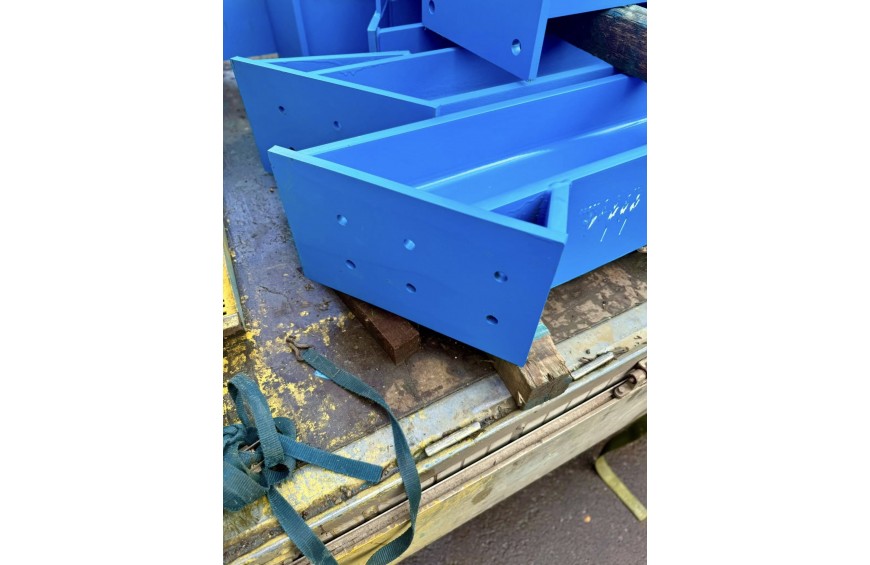
Steel delivery day has a particular rhythm on a construction site. The crane or HIAB arrives, the crew is ready, everything else has been organised around this moment. Then someone checks the beam against the drawing, and something is wrong.
It might be immediately obvious — the beam is visibly shorter than it should be. It might take a few minutes to spot — a hole pattern that doesn't match the connection plate, or a notch cut in the wrong flange. Either way, the mood on site changes. The crane driver is on the clock. The follow-on trades are booked. And the steel that was supposed to go up today is going back on the lorry.
Incorrectly fabricated steel is not a rare event. It happens across the industry, on projects of every size, for a range of reasons. What separates the jobs that absorb it without lasting damage from the ones that spiral into delays and disputes is mostly preparation — knowing what to check, knowing what your options are, and having the right conversations before work was ever ordered.
The Most Common Fabrication Errors
Not all errors are equal. Some are minor enough that a competent site team can work around them. Others stop the job completely. Understanding which is which matters for how you respond.
Wrong hole positions or diameters are probably the most frequent source of problems. Connection details are often developed separately from the main beam schedule — sometimes by the engineer, sometimes by the fabricator's own detailer — and the coordination between the two can break down. A bolt hole that's 20mm from where it should be might be unworkable with the specified connection plate. A hole drilled at the wrong diameter for the specified bolt grade can either fail to comply with the structural specification or prevent the bolt from fitting at all.
Incorrect length is straightforward in its cause and significant in its consequences. Steel is cut to length before any other fabrication work is done, so an error at the cutting stage affects everything that follows. A beam that is too short cannot usually be extended in the field — a welded splice is a structural operation requiring engineering sign-off and controlled conditions. A beam that is too long may physically prevent erection if the structure is tight, or create bearing problems at the connection points.
Wrong section size — receiving a 254×146 UB where a 305×165 UB was specified — occasionally happens when a job involves multiple similar sections and something is picked incorrectly at despatch. The section size directly affects structural performance, so substitution isn't a site decision. Even if the wrong beam would physically fit in the space, using it without engineering authorisation is not an option.
Incorrect notches or copes — the cuts made to a beam's flange or web to allow it to sit correctly against another element — are a subtler category of error. A cope in the wrong location or cut to the wrong dimensions can prevent connection, create a stress concentration in the wrong place, or simply mean the beam won't sit level. These errors are also harder to spot quickly on delivery, particularly on a busy site.
Missing or incorrectly positioned plates — end plates, stiffeners, base plates — fall into a similar category. A missing stiffener might not prevent erection but will mean the structure doesn't comply with the engineer's design. Identifying it and resolving it after the fact is considerably harder than catching it on delivery.
What Checking on Delivery Actually Looks Like
The first line of defence against an incorrectly fabricated beam causing a serious problem is a proper goods-in check. In practice, this is often cursory — someone looks at the delivery note, confirms the section size and quantity, and signs it off. That's not enough.
A thorough delivery check for fabricated steel involves comparing the physical sections against the fabrication drawings, not just the delivery note. That means:
- Measuring overall length against the drawing dimension
- Checking hole positions from a known datum point (not from the end of the beam, which can vary slightly)
- Confirming hole diameters — which requires a gauge or a bolt of the correct grade to test
- Verifying that any copes, notches, or cutouts match the drawing in position and dimension
- Checking that plates are present, correctly positioned, and of the specified thickness
This takes time, and on a busy site with a delivery vehicle waiting, the pressure to wave it through is real. The counterargument is straightforward: checking a beam on the ground takes fifteen minutes. Discovering the error after it's been lifted into position, or after other connections have been made around it, can cost days.
For projects where multiple fabricated sections are arriving across several deliveries, a simple check sheet tied to the fabrication drawing reference makes the process faster and creates a record. If something is wrong and a dispute arises later, documentation of what was checked and when matters.
When Something Is Wrong: The Immediate Decisions
Assuming an error is found on delivery — or shortly after — the first decision is whether the beam can be used as delivered, used with modification, or must be rejected and replaced.
Can it be used as delivered? In a small number of cases, what looks like an error is actually within permitted tolerance, or the discrepancy doesn't affect the structural performance or the connection geometry. This is a question for the structural engineer, not a site decision. Calling the engineer before rejecting a beam takes a few minutes and occasionally saves a significant delay.
Can it be modified on site? Drilling additional holes in steelwork is possible on site with the right equipment and is sometimes acceptable for minor positional corrections — again, subject to engineering confirmation that the revised hole position doesn't compromise anything. Extending a beam is not a site operation. Removing an incorrect notch is generally not possible; adding a notch that wasn't there is a structural cut requiring supervision and sign-off.
Does it need to go back? If the error is material — wrong length, wrong section size, hole pattern that prevents the specified connection — the beam typically needs to go back to the fabricator for correction or replacement. At this point, the site delay clock starts.
Re-Fabrication Timelines: What to Expect
The timeline for getting a corrected beam back depends on several factors, none of which are entirely within anyone's control.
A fabricator who is told about an error immediately and has the original drawings to hand can usually assess turnaround within a few hours. The realistic timeline from that point depends on whether it's a correction to the original beam or a complete re-fabrication.
Corrections — re-drilling holes, cutting a new notch, trimming a beam that's slightly long — are workshop jobs that can often be turned around in one or two days, assuming the fabricator's workshop isn't at full capacity and the beam hasn't already been surface treated. If it has been primed or painted, corrections will require re-treatment of the affected area, which adds time.
Complete re-fabrication of a single beam is, in principle, a short job — a single section cut and drilled to a known specification. In practice, getting it prioritised in a busy workshop can be the constraint. Realistic lead times for a single re-fabricated beam range from two to five working days at a fabricator who is prepared to expedite. Longer if the error is identified late in the week, if the section isn't in stock, or if the fabricator is at capacity.
This is where the relationship with the supplier genuinely matters. A supplier who knows your project, is invested in getting it right, and has stock on hand will respond differently from one who is processing you as a single order in a queue. It's one of the less-discussed arguments for not always choosing on price alone.
The Knock-On Effects That Compound the Damage
A single beam arriving wrong doesn't just delay the steelwork. It compresses or disrupts everything downstream.
Scaffold that was due to be struck isn't struck. A concrete pour that depended on the steelwork being in place is pushed back. Mechanical and electrical contractors who were due to start first fix are now waiting. If the project is occupied — a domestic extension or a building that's partially in use — the disruption extends into people's lives in ways that create pressure and sometimes claims.
On a commercial project running on a JCT or NEC contract, the downstream costs of a fabrication error can substantially exceed the cost of the beam itself. Programme delay claims, acceleration costs to recover time, prelims running at full rate while steelwork is sorted — the numbers add up quickly.
This is the real cost of a fabrication error. Not the beam. The time.
Reducing the Risk Before Delivery
Some of this risk is unavoidable — fabrication errors happen even with competent fabricators and thorough processes. But several things reduce the probability significantly.
Ensuring that fabrication drawings are approved before manufacture begins — not rubber-stamped quickly to avoid delay, but genuinely reviewed — catches most errors before they reach the workshop floor. Asking the fabricator to confirm section sizes and key dimensions against the delivery note before despatch adds a second checkpoint at minimal cost. For critical or complex sections, an off-hire inspection at the fabricator's premises before the lorry is loaded can save a wasted journey entirely.
None of these are radical suggestions. They're the kind of process discipline that experienced project managers apply as a matter of course, and that first-time clients often discover the value of after the first project goes wrong.
Pratley's Builders Beams supplies structural steel sections cut to length for domestic and commercial projects across the UK. If you have questions about lead times, section availability, or checking fabricated steel against drawings, talk to our team.

Submit comment Cancel Reply