

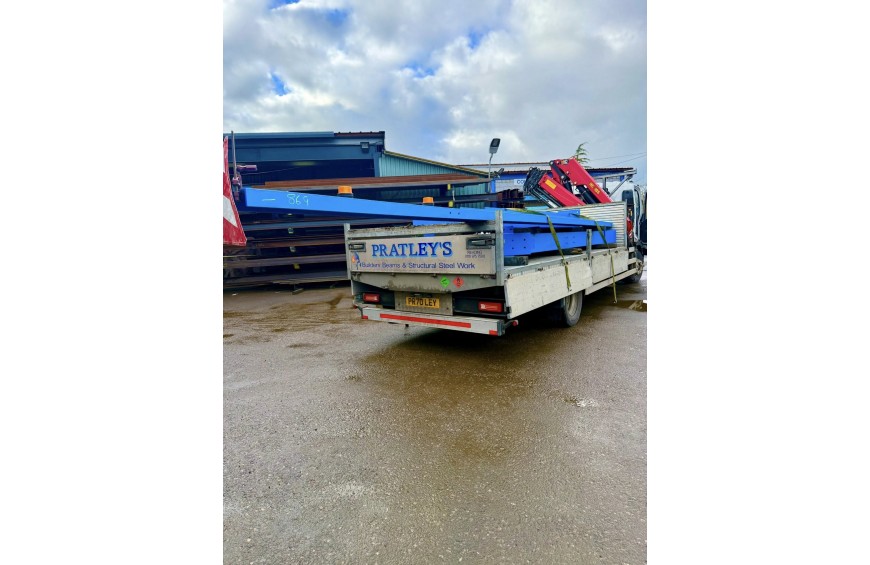
Steel's excellent structural properties—high strength, predictable performance, versatility—come with one significant limitation: steel loses strength rapidly when exposed to fire temperatures. At 550°C steel retains only 60% of its ambient strength; at 750°C just 20% remains. This temperature-dependent weakness means structural steel beams in buildings require fire protection preventing premature collapse during fires, protecting occupants and firefighters, and limiting property damage. Yet fire protection represents one of the most commonly misunderstood, improperly specified, and incorrectly installed aspects of steel beam projects, with builders discovering compliance requirements after installation when remediation is expensive and disruptive.
For builders, self-builders, and developers undertaking projects involving structural steel beams across UK residential, commercial, and mixed-use developments, understanding fire protection requirements, available protection methods, regulatory triggers, and proper installation transforms fire protection from afterthought crisis into planned specification addressed during design rather than discovered during Building Control inspection. The reality is that fire protection requirements are predictable, costs are modest relative to overall project budgets when properly planned, and correct initial installation costs far less than remediation after beams are installed and finishes completed.
This guide explains UK Building Regulations fire protection requirements for structural steel, describes available protection methods with realistic costs and performance characteristics, identifies when fire protection is required versus when exemptions apply, illustrates common installation errors compromising protection, and provides practical guidance ensuring your steel beam installation meets fire safety requirements without expensive surprises or delays.
Understanding Fire Resistance: What the Ratings Mean
Building Regulations specify fire resistance in minutes—30, 60, 90, or 120 minutes typical—representing duration the element must maintain structural adequacy, integrity, and insulation during standard fire test conditions.
Three Performance Criteria
Structural adequacy (load-bearing capacity): Element must continue supporting applied loads throughout fire duration. For steel beams, this means maintaining adequate strength as temperature rises, preventing collapse.
Integrity (preventing fire spread): Element must prevent flames and hot gases passing through—relevant for walls and floors but less critical for exposed beams which aren't separating elements.
Insulation (temperature transmission): Element must limit temperature rise on unexposed face—primarily relevant for separating elements, less critical for beams.
For structural steel beams, structural adequacy is the governing criterion—beams must maintain load-bearing capacity for specified duration preventing structural collapse.
Standard Fire Curve
Fire resistance ratings reference standard ISO 834 fire curve defining temperature rise over time:
- 5 minutes: 576°C
- 10 minutes: 678°C
- 30 minutes: 842°C
- 60 minutes: 945°C
- 90 minutes: 1,006°C
- 120 minutes: 1,049°C
Unprotected steel reaches critical temperature (approximately 550°C at which strength drops to 60% of ambient) within 10-15 minutes of standard fire exposure. Fire protection systems slow steel temperature rise enabling beams to maintain adequate strength throughout required fire resistance period.
Section Factor: The Critical Variable
Steel section heating rate during fires depends on exposed surface area relative to mass—expressed as section factor (Hp/A):
Section factor = Heated Perimeter (Hp) ÷ Cross-sectional Area (A)
Units: m⁻¹ (meters of perimeter per square meter of cross-section)
Example: 178×102 UB19
- Heated perimeter (4 sides exposed): 2(178mm) + 2(102mm) = 560mm = 0.56m
- Cross-sectional area: 2,430 mm² = 0.00243 m²
- Section factor: 0.56 ÷ 0.00243 = 230 m⁻¹
High section factor (thin, light sections with large perimeter relative to area) = faster heating requiring more fire protection.
Low section factor (heavy, compact sections with small perimeter relative to area) = slower heating requiring less fire protection.
This explains why lighter beams sometimes need thicker fire protection than heavier beams—the lighter section heats faster despite lower absolute load.
Protected vs. Unprotected Steel
Unprotected steel exposed directly to fire:
- Reaches critical temperature 10-15 minutes after fire starts
- Fire resistance: typically 15 minutes maximum
- Adequate only where regulations permit minimal fire resistance
Protected steel with approved fire protection system:
- Insulation slows temperature rise
- Achieves 30, 60, 90, or 120+ minute ratings depending on protection thickness/type
- Required for most building applications per Building Regulations
UK Building Regulations Fire Protection Requirements
Approved Document B (Fire Safety) defines when and how much fire protection structural elements require.
Residential Buildings (Purpose Group 1)
Houses (including extensions and conversions):
Fire resistance requirements vary by building height and element function:
Ground floor beams in two-storey houses:
- Minimum 30 minutes fire resistance typically required
- Exception: If beam supports only upper floor (not roof), and upper floor provides 30-minute fire resistance, beam fire resistance may reduce to 15 minutes in some circumstances—confirm with Building Control
First floor beams in two-storey houses:
- 30 minutes fire resistance where beam supports roof structure
- May be unprotected if supporting only roof and specific conditions met (single dwelling, alternative fire safety measures)
Beams in three-storey houses:
- 30 minutes minimum, 60 minutes for beams supporting more than one floor above
- Increased requirements reflecting higher building risk
Loft conversion beams:
- 30 minutes fire resistance for new structural beams
- Requirement depends on whether conversion creates habitable room or storage space
Exemptions:
- Small external structures (detached garages, garden rooms) may not require fire protection
- Beams fully encased in concrete or masonry achieving fire resistance through encasement
- Specific low-risk situations approved by Building Control
Reality: Most domestic steel beams removing load-bearing walls or supporting floors require 30-minute fire resistance minimum. Assuming exemption without Building Control confirmation risks costly remediation.
Flats and Apartments (Purpose Group 1b)
Significantly higher requirements reflecting multiple occupancies and shared means of escape:
Structural elements (including beams):
- 30 minutes minimum (buildings up to 5m high)
- 60 minutes standard (buildings 5-18m high—typical 2-6 storey blocks)
- 90 minutes or higher for taller buildings or specific risk situations
Beams within flats: May have reduced requirements if separated from communal areas by fire-resisting construction.
Beams in communal areas or supporting multiple dwellings: Full fire resistance requirements apply—typically 60 minutes for standard blocks.
Commercial Buildings (Purpose Groups 2-7)
Offices, shops, assembly buildings, industrial:
Requirements vary significantly by:
- Building height (measured in meters, not storeys)
- Building use (risk category affects requirements)
- Means of escape provisions
- Sprinkler installation (can reduce fire resistance requirements)
Typical requirements:
- Single storey commercial: 30-60 minutes depending on area and use
- Multi-storey commercial (up to 18m): 60 minutes standard
- Higher buildings or specific high-risk uses: 90-120 minutes
Sprinklered buildings benefit from reduced requirements: A building fully protected with automatic sprinkler system meeting BS EN 12845 may reduce fire resistance requirements by 30 minutes (but not below 30 minutes minimum).
Example: Office building requiring 60-minute fire resistance, if sprinklered, may reduce to 30 minutes—substantial cost saving in fire protection while improving overall fire safety.
Practical Application: Determining Your Requirements
Step 1: Identify building purpose group (residential, commercial, assembly, etc.)
Step 2: Measure building height (not storey count—actual height in meters)
Step 3: Identify beam function (supporting floors, supporting roof only, within single dwelling vs. supporting multiple occupancies)
Step 4: Consult Approved Document B tables for specific requirements
Step 5: Consider whether sprinklers affect requirements
Step 6: Confirm with Building Control—don't assume; verify specific project requirements
Common mistake: Assuming "it's just a house extension so fire protection isn't needed." Most house extensions with structural beams require 30-minute fire resistance. Verify don't assume.
Fire Protection Methods: Options and Applications
Multiple fire protection methods exist, each with specific applications, costs, performance, and installation considerations.
Method 1: Intumescent Coatings
What it is: Paint-like coating applied to steel surface that expands when heated forming insulating char layer protecting steel. Thin-film (0.5-5mm typically) or thick-film (5-25mm) versions available.
How it works: Heat triggers chemical reaction causing coating to intumesce (foam/expand) up to 50× original thickness, creating carbonaceous char layer insulating steel from fire temperatures.
Performance:
- Thin-film intumescents: 30-60 minutes fire resistance typical (depends on coating thickness and section factor)
- Thick-film intumescents: Up to 120 minutes possible with sufficient thickness
- Performance varies by product, section factor, and exposure conditions
Applications best suited:
- Exposed beams where aesthetics matter (coating can be overcoated with decorative paint)
- Retrofit applications where encasement isn't practical
- Complex sections or connections difficult to encase
- Light steel sections requiring only 30-60 minute protection
Installation requirements:
- Steel surface must be clean, dry, rust-free (grit-blast or wire brush)
- Primer coat typically required (some systems include integral primer)
- Multiple coats to achieve required dry film thickness (DFT)
- Each coat must dry before next application
- Final inspection measuring DFT with calibrated gauge
- Top coat with approved decorative finish if desired
Costs:
- Material: £15-£35 per m² per 30 minutes fire resistance
- Application labor: £20-£40 per m² depending on access and complexity
- Total installed cost: £35-£75 per m² for 30-minute protection, £70-£150 per m² for 60-minute protection
Example: 178×102 UB19, 5m length
- Surface area: (0.178m + 0.102m) × 2 × 5m = 2.8 m²
- 30-minute protection cost: 2.8 × £50 = £140
- 60-minute protection cost: 2.8 × £110 = £308
Advantages:
- Maintains beam visibility for architectural effect
- Lightweight—adds negligible dead load
- No reduction in room space
- Relatively easy application
Disadvantages:
- Requires careful surface preparation
- Application quality critical—under-application reduces performance
- Some products sensitive to moisture (basement or external applications problematic)
- Can be damaged by impact requiring repair
- Typically requires specialist applicator for warranty/certification
- May degrade over time requiring inspection/maintenance (15-20 year typical lifespan before reapplication)
Method 2: Board Encasement (Plasterboard or Specialist Fire Board)
What it is: Steel beam enclosed within fire-resistant board system—typically calcium silicate boards, gypsum-based plasterboard (Fireline/Glasroc), or vermiculite boards.
How it works: Board material provides insulation barrier preventing heat reaching steel. Board thickness and thermal properties determine fire resistance duration.
Common systems:
Plasterboard encasement:
- Double layer 12.5mm Fireline board (Type F plasterboard): 60 minutes typical
- Single layer 15mm Fireline: 30 minutes typical
- Requires proper detailing at joints and fixings
Calcium silicate boards:
- 15-25mm boards: 60-120 minutes depending on thickness and section factor
- Very effective insulation, non-combustible
- More expensive than plasterboard but lower profile
Vermiculite boards:
- 15-30mm boards: 60-120 minutes
- Lightweight, easily cut and fitted
- Specialist product for fire protection
Installation: Boards attached to steel using:
- Self-drilling screws into steel
- Steel angle frame around beam with boards screwed to frame
- Proprietary track systems (for some board types)
Joints sealed with intumescent mastic or fire-rated tape preventing gaps compromising protection.
Applications best suited:
- Hidden beams (within ceiling voids, plastered walls)
- Heavy or complex sections where intumescent costs excessive
- Long-term protection without maintenance concerns
- Where architectural finish will conceal encasement
Costs:
- Material: £20-£40 per m² (plasterboard cheaper, specialist boards expensive)
- Frame/fixing materials: £10-£15 per meter run
- Installation labor: £30-£60 per m² depending on complexity
- Total installed cost: £60-£115 per m² for 60-minute protection
Example: 254×102 UB25, 4m length
- Perimeter: (0.254m + 0.102m) × 2 = 0.712m
- Surface area: 0.712m × 4m = 2.85 m²
- 60-minute protection cost (Fireline): 2.85 × £85 = £242
Advantages:
- Robust—resistant to damage
- Long service life without maintenance
- Can provide architectural finish (plasterboard skimmed)
- Moisture-resistant options available
- Proven technology with extensive testing data
Disadvantages:
- Increases beam profile (typically 50-75mm all sides)
- Adds weight (modest but relevant for some structures)
- Reduces room space slightly
- Installation more labor-intensive than coating
- Conceals beam—no architectural exposure
- Access for future inspection/alteration complicated
Method 3: Concrete or Masonry Encasement
What it is: Steel beam fully encased within concrete (cast in-situ) or surrounded by masonry blockwork providing fire protection through mass and thermal properties.
How it works: Concrete or masonry thickness and thermal mass absorb heat preventing steel temperature rise. Cover thickness (distance from steel surface to exposed face) determines fire resistance.
Typical specifications:
Concrete encasement:
- 25mm cover: 30 minutes
- 40mm cover: 60 minutes
- 50mm cover: 90 minutes
- Cover measured to all steel surfaces
Blockwork encasement:
- 100mm dense concrete blockwork: 60-90 minutes typical
- Fire resistance varies by block density and mortar type
Applications best suited:
- Ground floor beams where encasement creates habitable space below (increased ceiling height offset by encasement)
- Beams where architectural expression requires masonry or concrete appearance
- External beams requiring weatherproofing alongside fire protection
- Situations where encasement serves multiple functions (structure, fire protection, architectural finish)
Installation: Concrete requires:
- Formwork around beam (temporary shuttering)
- Reinforcement as required (typically light mesh preventing cracking)
- Concrete placement ensuring complete fill without voids
- Adequate curing time
Blockwork requires:
- Building up around beam sides and below
- Continuous courses maintaining even coverage
- Quality mortar ensuring good bond
Costs:
- Concrete encasement material: £80-£150 per m³ (including formwork, concrete, reinforcement)
- Blockwork encasement: £60-£90 per m² of blockwork face
- Labor intensive—costs vary widely by complexity
- Typical total cost: £200-£400 per meter run of beam
Example: 203×133 UB25, 3m length
- Concrete encasement (40mm cover): ~£600-£900 depending on formwork complexity
Advantages:
- Extremely robust and damage-resistant
- Very long service life (building lifetime)
- No maintenance required
- Can serve architectural or structural functions beyond fire protection
- Moisture and weather resistant
Disadvantages:
- Very heavy—adds significant dead load requiring structural verification
- Substantially increases beam profile (100mm+ typical)
- Most expensive protection method typically
- Labor intensive installation
- Difficult to modify or access beam after encasement
- Curing time (concrete) delays construction
Method 4: Suspended Ceiling Protection
What it is: Fire-rated suspended ceiling below beam providing fire protection to everything above ceiling line.
How it works: Suspended ceiling tested and rated for specific fire resistance protects beams above from fire in space below ceiling. Beam doesn't receive direct fire protection but relies on ceiling barrier.
Requirements:
- Ceiling must be tested and certified for fire resistance rating required
- Ceiling must be continuous without gaps compromising protection
- Services penetrating ceiling must be properly fire-stopped
- Ceiling must remain in place during fire (adequate fixings, protected hangers)
Applications best suited:
- Commercial buildings with suspended ceilings anyway (offices, retail)
- Multiple beams in ceiling void all protected by single ceiling installation
- Buildings where ceiling serves multiple functions (acoustics, services distribution, fire protection)
Costs:
- Fire-rated suspended ceiling: £25-£50 per m² installed
- For room with multiple beams, cost spreads across ceiling area rather than per beam
Advantages:
- Protects multiple beams simultaneously
- No individual beam treatment required
- Ceiling serves multiple building functions
- Can access beams above ceiling for inspection/maintenance
Disadvantages:
- Only protects beams from fire below—not suitable if fire risk above
- Requires continuous ceiling throughout space
- Ceiling integrity critical—damage compromises protection
- May not meet requirements for structural elements in some building types
- Building Control may not accept for primary structural beams in higher-risk situations
Common Installation Errors and How to Avoid Them
Fire protection failures often result from installation errors rather than design inadequacies.
Error 1: Inadequate Intumescent Coating Thickness
The problem: Intumescent performance depends critically on achieving specified dry film thickness (DFT). Under-application reduces fire resistance period—sometimes dramatically.
How it happens:
- Applicator estimates thickness visually without measurement
- Insufficient coats applied to save time/material
- Coating spreads too thin during application
Consequences: 30-minute rated system applied at 60% specified thickness might provide only 18-20 minutes protection—failing to meet Building Regulation requirements.
Prevention:
- Specify required DFT in contract documents
- Require applicator use calibrated DFT gauge checking multiple points
- Independent inspection verifying achieved thickness before acceptance
- Documentation (photos, measurements) proving compliance
Remediation if discovered: Additional coats applied achieving specified thickness. Cost: £15-£30 per m² additional coating plus access/preparation costs.
Error 2: Inadequate Surface Preparation (Intumescents)
The problem: Intumescent coatings require clean, dry, rust-free steel surface for proper adhesion. Contamination, rust, or moisture prevent proper bonding, and coating may debond during fire or even normal conditions.
How it happens:
- Coating applied to rusty steel without preparation
- Inadequate cleaning—grease, dirt, mill scale present
- Coating applied in damp conditions or to wet steel
Consequences: Coating debonds from steel providing no fire protection. May not be visible until fire occurs or coating begins peeling.
Prevention:
- Grit-blast or wire-brush steel to bare metal (SA 2.5 standard ideally)
- Clean with solvent removing grease/contamination
- Apply coating only in dry conditions to dry steel
- Use proper primer if specified by manufacturer
- Visual inspection before and after application
Error 3: Gaps in Board Encasement
The problem: Gaps at joints, around fixings, or where boards meet structural elements allow hot gases to reach steel, creating weak points in fire protection.
How it happens:
- Boards not tightly butted together
- Inadequate sealing around fixings
- Poor detailing where encasement meets walls, floors, or other elements
- Damage during subsequent trades (electricians, plumbers creating access holes)
Consequences: Hot gases penetrate gaps reducing effective fire resistance. Even small gaps can reduce 60-minute protection to 30 minutes or less locally.
Prevention:
- Ensure tight-fitting board joints (cut accurately, dry-fit before fixing)
- Seal all joints with intumescent mastic or fire-rated tape
- Use appropriate fire-stopping around penetrations
- Protect completed encasement from damage (signage, barriers)
- Final inspection before closing up
Remediation: Remove damaged sections, refit boards properly, seal all joints. Cost varies by extent but typically £200-£500 for localized repairs.
Error 4: Insufficient Concrete Cover
The problem: Concrete encasement fire resistance depends on cover thickness (concrete between steel surface and fire exposure). Inadequate cover reduces protection below required rating.
How it happens:
- Formwork positioned incorrectly
- Beam moves during concrete placement
- Inadequate spacers maintaining cover
- Cover assumed rather than measured/verified
Consequences: 40mm cover specified for 60-minute protection actually installed at 25mm provides only 30-minute protection—non-compliant with Building Regulations.
Prevention:
- Accurate formwork positioning and securing
- Spacers maintaining cover during concrete placement
- Inspection before and during concrete pour
- Cover measurement after formwork removal using covermeters
Remediation: If discovered before Building Control final inspection: Apply additional fire protection (intumescent coating or board encasement) compensating for inadequate concrete cover. Cost: £300-£800 depending on beam size and access.
Error 5: Using Unrated or Inappropriate Materials
The problem: Fire protection materials must be tested and certified for specific fire resistance periods and applications. Using non-rated materials, wrong products, or substituting materials voids certification.
How it happens:
- "Equivalent" materials substituted without verification
- Standard plasterboard used instead of fire-rated (Fireline/Glasroc)
- Products used outside tested application (exterior-rated intumescent used internally)
- Expired or degraded materials applied
Consequences: Protection doesn't perform as assumed. Building Control rejects installation requiring replacement with proper materials.
Prevention:
- Specify products by manufacturer name and product code
- Require certification documentation for all fire protection materials
- Verify materials on site match specifications before installation
- Don't accept substitutions without engineer/Building Control approval
Error 6: Incomplete Protection at Connections
The problem: Beam connections (to columns, walls, other beams) often receive inadequate fire protection attention. Connections heat faster than beam spans due to thermal bridging and can fail earlier than protected span.
How it happens:
- Focus on beam span protection, connections neglected
- Assumption that partial protection is adequate
- Access difficulties at connections leading to incomplete coverage
Consequences: Connection failure causes structural collapse even though beam span maintains capacity. Connection may be critical failure point despite span protection.
Prevention:
- Explicitly specify connection protection requirements
- Ensure protection system covers full beam including all connections
- Pay particular attention to complex connection details
- Verify connection protection before closing up with finishes
Regulatory Compliance and Building Control
Successfully navigating Building Control approval requires understanding requirements and processes.
When Building Control Requires Fire Protection Certification
Most Building Control bodies require:
Product certification:
- Test evidence showing product achieves claimed fire resistance
- Third-party certification (BBA, LPCB, or equivalent)
- Installation instructions and limitations
Installation certification:
- Confirmation installation matches tested configuration
- For some products (particularly intumescents), applicator certification
- Photographic evidence of completed installation
- DFT measurements for coating systems
Design calculations: For some applications, engineer calculations demonstrating:
- Applied loading during fire conditions
- Steel temperature rise analysis
- Verification that protected steel maintains adequate capacity
Documentation Requirements
Building Control typically requires:
Pre-construction:
- Fire protection specification including product details
- Section factor calculations
- Confirmation requirements meet Approved Document B
During construction:
- Inspection photographs showing protection application
- DFT measurements (for coatings)
- Cover measurements (for concrete encasement)
- Installation certificates from approved contractors
Completion:
- Final certification package
- Product datasheets and test evidence
- Installation records
- Maintenance requirements documentation
Common mistake: Assuming Building Control will accept verbal assurances or general statements. Specific documentation is required—gather systematically during construction.
Third-Party Certification and Approved Contractors
Many fire protection products require installation by certified contractors:
Intumescent coatings: Some manufacturers require applicator certification (training course, annual renewal) for warranty validity. Building Control may require certified applicators regardless of warranty.
Specialist board systems: Proprietary systems often require trained installers for warranty and compliance.
Standard materials: Plasterboard encasement can typically be installed by competent builders without special certification, though quality workmanship is critical.
Verification: Check contractor credentials before awarding contracts. Certification proves competence and may be required for Building Control approval.
Costs Summary and Budget Planning
Fire protection costs vary significantly by method, protection duration, and beam size. Budget planning should include realistic allowances.
Budget Benchmarks (2024 UK)
30-minute protection:
- Intumescent coating: £40-£60 per m² of steel surface
- Plasterboard encasement (single layer): £55-£75 per m²
- Total per typical residential beam (178×102 UB19, 4m): £100-£200
60-minute protection:
- Intumescent coating: £90-£140 per m²
- Plasterboard encasement (double layer): £80-£120 per m²
- Calcium silicate boards: £100-£150 per m²
- Total per typical beam: £220-£450
Project-level budgeting:
Small house extension (single 4m beam, 30-minute): £150-£250
Large house extension (three beams, mixed 30/60-minute): £600-£1,200
Commercial fitout (10 beams, all 60-minute): £4,000-£8,000
Cost as percentage of total steel package: Fire protection typically adds 15-40% to bare steel beam costs depending on protection level required and method chosen.
Cost Optimization Strategies
Early specification: Include fire protection in initial design rather than afterthought. Enables optimized method selection and competitive tendering.
Method selection: Choose most economical method meeting requirements:
- Exposed beams requiring aesthetics: Intumescent coating
- Hidden beams: Board encasement often cheaper for 60+ minute protection
- Multiple beams in ceiling void: Suspended ceiling may be most economical
Value engineering: Consider whether design changes reduce fire protection requirements:
- Can building be sprinklered reducing required fire resistance period?
- Can beam position or building layout changes affect requirements?
- Are all beams actually requiring protection or do exemptions apply?
Competitive tendering: Fire protection is specialist work with significant cost variation between contractors. Obtain multiple quotes ensuring comparable scope.
Conclusion: Fire Protection as Integral Design Element
Fire protection for structural steel beams represents critical regulatory compliance, life safety, and property protection requirement that deserves systematic attention during project design rather than crisis management after installation. Understanding UK Building Regulations requirements, available protection methods, realistic costs, and proper installation prevents the expensive surprises, compliance failures, and remediation costs that plague projects treating fire protection as afterthought.
For builders and self-builders undertaking steel beam installations across residential and commercial projects, the message is clear: identify fire protection requirements early, specify appropriate methods during design, budget realistically for protection costs, ensure proper installation by competent contractors, and maintain documentation satisfying Building Control. The modest investment in proper fire protection—typically £150-£500 per residential beam—provides life safety compliance, Building Control approval, and protection against the catastrophic consequences of structural failure during fires.
Pratley's Builders Beams provides not only steel beam supply but guidance on fire protection requirements helping customers understand their obligations, available options, and realistic budgets before surprises arise. Our experience across thousands of projects enables practical advice distinguishing between essential requirements and common misconceptions, helping customers achieve compliance efficiently.
Contact Pratley's Builders Beams to discuss your steel beam requirements including fire protection needs. Whether your project requires 30-minute intumescent coating or 60-minute board encasement, we'll help you understand requirements, budget appropriately, and ensure your structural solution meets both structural and fire safety obligations. Your steel beam installation deserves proper fire protection—let us help ensure compliance and safety without unnecessary cost or complication.

Submit comment Cancel Reply