

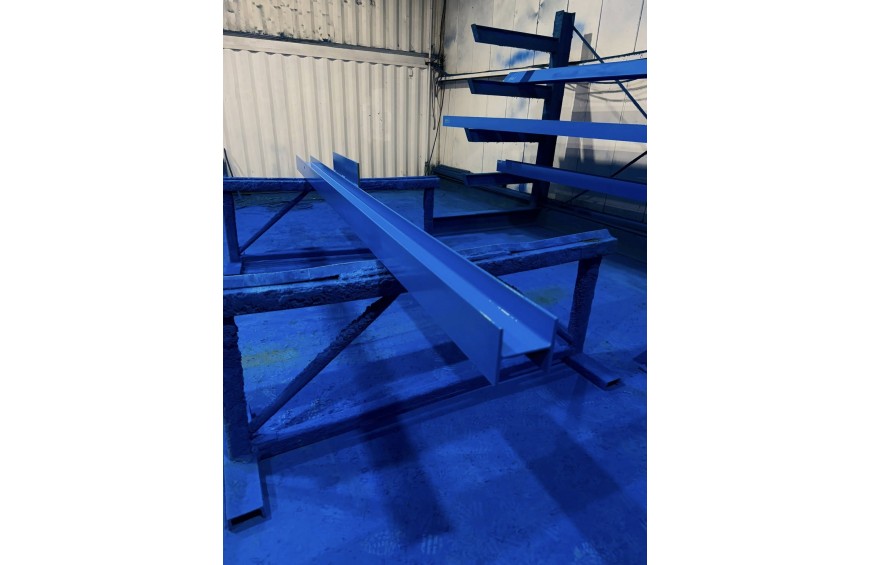
Steel is one of the most durable structural materials available, but it has one significant weakness: it corrodes. Unprotected steel exposed to moisture and oxygen undergoes oxidation—the electrochemical process that produces iron oxide, commonly known as rust. Left untreated, corrosion progressively reduces a steel beam's cross-section, compromising its load-carrying capacity and, eventually, its structural integrity.
For most domestic applications—wall removals, loft conversions, extensions—a steel beam installed inside a building and encased in plasterboard or concrete will have minimal ongoing corrosion exposure once the structure is complete and dry. In these situations, basic surface preparation and a primer coat is often sufficient. But that straightforward scenario doesn't apply to every project, and understanding when more substantial protection is needed—and which system to use—is essential knowledge for builders, self-builders, and developers working with structural steel in the UK.
This guide explains how steel corrodes, describes the main protection systems available (paint, galvanising, and intumescent coatings), clarifies the difference between corrosion protection and fire protection, and helps you determine which approach is appropriate for your specific project.
How Steel Corrodes: The Basics
Corrosion of steel is an electrochemical process requiring three elements to occur simultaneously: iron (present in steel), oxygen, and moisture. Remove any one of these and corrosion stops. Protection systems work by interrupting this process—either by creating a physical barrier preventing moisture and oxygen from reaching the steel surface, by providing a sacrificial layer that corrodes preferentially in place of the steel, or by chemically passivating the surface reducing electrochemical activity.
The rate of corrosion depends heavily on environment. Steel in a dry interior environment corrodes extremely slowly—a well-primed beam inside a plastered wall will show negligible deterioration over decades. Steel in a permanently humid or wet environment corrodes much faster. Steel exposed to chlorides (coastal locations, road salt, swimming pool environments) corrodes fastest of all, because chlorides accelerate the electrochemical reaction and break down many conventional protective coatings.
Structural steel beams supplied in the UK are typically delivered with a standard mill finish—a thin oxide layer formed during cooling after rolling. This provides no meaningful corrosion protection. Some suppliers apply a basic shop primer before dispatch, providing limited temporary protection during transport and storage. Neither of these constitute adequate long-term protection for exposed applications.
Understanding Your Exposure Environment
Before selecting a protection system, you need to honestly assess the environment the beam will experience throughout its service life. The UK National Annex to BS EN ISO 12944 defines corrosivity categories for steel structures:
C1 – Very Low Corrosivity
Heated buildings with clean atmospheres: offices, shops, schools, hotels. Steel beams in standard domestic interiors—spanning a knocked-through wall, supporting a loft conversion—fall into this category once the building is complete, heated, and dry. Minimal protection required.
C2 – Low Corrosivity
Unheated buildings where condensation may occur: storage facilities, sports halls, some warehouses. Also applies to rural outdoor environments with low pollution. Moderate protection required.
C3 – Medium Corrosivity
Buildings with high humidity and some air pollution: food processing facilities, laundries, breweries, some coastal buildings. Outdoor environments in urban or industrial areas. More robust protection systems required.
C4 – High Corrosivity
Chemical plants, swimming pools, coastal shipyards, offshore support structures. High protection systems required.
C5 – Very High Corrosivity
Buildings with near-permanent condensation and high pollution. Offshore or aggressive coastal environments. Maximum protection systems required.
Most domestic steel beam installations fall into C1 or at most C2. Agricultural buildings, coastal properties, and industrial applications may reach C3 or higher. Getting this assessment right matters because under-specifying protection leads to premature corrosion, while over-specifying adds unnecessary cost to straightforward projects.
Paint Systems: The Most Common Approach
Paint-based protection systems are by far the most widely used method for structural steelwork in UK building projects. They work by creating a physical barrier between the steel surface and the corrosive environment, often combined with inhibitive pigments that chemically passivate the steel surface beneath the coating.
Surface Preparation: The Foundation of Any Paint System
No paint system performs better than its surface preparation. Applying excellent paint to poorly prepared steel is a waste of money—paint adhesion depends entirely on the condition and cleanliness of the substrate.
Grit blasting (abrasive blasting) is the gold standard for surface preparation. Steel is propelled with abrasive media (steel grit, copper slag, or similar) creating a clean, profiled surface with mechanical anchor points for the paint. Blast cleaning standards are specified according to ISO 8501-1:
- Sa 1 – Light blast cleaning. Removes loose mill scale, rust, and debris. Minimum standard for C1 environments.
- Sa 2 – Thorough blast cleaning. Removes most mill scale and rust. Suitable for C2-C3 environments.
- Sa 2½ – Very thorough blast cleaning. Removes virtually all mill scale, rust, and foreign material. Required for C3-C5 environments and most specified paint systems.
- Sa 3 – Blast cleaning to visually clean steel. Complete removal of all contamination. Required for highest-performance systems.
Hand and power tool cleaning (wire brushing, grinding, needle guns) achieves lower standards (St 2 and St 3 in ISO 8501-1) and is suitable only for C1-C2 environments with appropriate paint systems. It's commonly used on site for minor touch-ups or where blast facilities aren't available, but shouldn't be relied upon as primary preparation for any significant structural steelwork.
Solvent cleaning removes grease and contamination but not mill scale or rust. It's a pre-treatment before mechanical cleaning, not a substitute for it.
Paint System Components
A complete paint system typically comprises three functional layers, each performing a specific role:
Primer contacts the steel directly. It must adhere strongly to the prepared surface and provide corrosion inhibition. Common primer types include:
- Zinc-rich primers (epoxy zinc or zinc silicate base) – Provide sacrificial cathodic protection. Zinc corrodes preferentially protecting underlying steel. Excellent performance for C3+ environments.
- Etch primers – Chemically react with steel surface improving adhesion. Used as thin pre-treatments under build coats.
- Epoxy primers – Excellent chemical and moisture resistance. Good adhesion to blast-cleaned surfaces. Used in C2-C5 environments.
- Alkyd primers – Lower-cost option for C1-C2 environments. Less durable than epoxy but adequate for benign interiors.
Build coat (mid-coat) provides film thickness and barrier protection. It sits between primer and topcoat, building up total dry film thickness (DFT). Common types include micaceous iron oxide (MIO) epoxy, high-build epoxy, or similar chemically resistant materials. Not all systems include a separate build coat—some two-coat systems use a heavy primer and topcoat only.
Topcoat provides the final barrier, UV resistance (if required for exposed applications), and aesthetic finish. Topcoat selection depends on environment and appearance requirements:
- Alkyd topcoats – Suitable for C1-C2. Standard gloss finish. Limited chemical resistance but adequate for clean dry interiors.
- Polyurethane topcoats – Better UV resistance and durability. Suitable for C2-C3. Good for applications requiring a durable decorative finish.
- Epoxy topcoats – Excellent chemical and moisture resistance but chalk in UV exposure. Suitable for C3-C4 internal or sheltered applications.
- Acrylic topcoats – Good UV resistance and colour retention. Suitable for C2-C3 exposed applications.
Typical Paint Specifications by Environment
C1 (Standard dry interior): One coat alkyd primer (50 microns DFT). Optional single topcoat for appearance. Total system cost: £5-£15 per square metre applied.
C2 (Unheated or slightly humid interior): Epoxy primer (75 microns DFT) plus polyurethane or alkyd topcoat (50 microns DFT). Total system cost: £15-£25 per square metre applied.
C3 (High humidity or mild industrial): Zinc-rich epoxy primer (75 microns) plus epoxy build coat (100 microns) plus polyurethane topcoat (50 microns). Total DFT: 225 microns minimum. Total system cost: £30-£50 per square metre applied.
C4-C5 (Aggressive environments): Zinc silicate primer (75 microns) plus multiple epoxy build coats (150+ microns total) plus specialist topcoat (75 microns). Total DFT: 300+ microns. Total system cost: £60-£120+ per square metre applied.
Application: Shop vs Site Painting
Shop painting (applied at fabricator or coating specialist's facility before delivery) produces better results. Controlled conditions enable proper blast cleaning, controlled temperature and humidity during application, and consistent quality inspection. Most structural steelwork for commercial and significant residential projects receives shop-applied primer as minimum.
Site painting is common for smaller projects and topcoats applied after installation. Conditions are less controlled—temperature, humidity, contamination from construction activities, and limited access all affect quality. Site painting is adequate for C1-C2 topcoat application but shouldn't be relied upon for primer application on anything above C2 environments.
Touch-up and repair of damaged shop primer is always required on site—cutting, drilling, welding, and handling inevitably damage primer. Touch-up must use compatible materials and proper surface preparation (wire brushing or grinding to clean metal, then prime). Zinc-rich touch-up paints are available for repairing zinc-rich primer damage.
Hot-Dip Galvanising: The Most Durable Conventional Protection
Hot-dip galvanising involves immersing steel in molten zinc at approximately 450°C. The zinc metallurgically bonds with the steel surface, forming a series of zinc-iron alloy layers topped with a pure zinc outer layer. The result is a coating that's integral to the steel rather than simply adhered to it—making it far more durable and impact-resistant than paint.
How Galvanising Protects Steel
Galvanising provides protection through two mechanisms:
Barrier protection: The zinc coating physically prevents moisture and oxygen reaching the steel, as paint does. Zinc forms stable compounds on its surface (zinc carbonate, zinc hydroxide) that further slow degradation of the coating itself.
Sacrificial (cathodic) protection: Where the zinc coating is damaged or at cut edges, zinc sacrificially corrodes in preference to the underlying steel. This is the critical advantage over paint—a scratched paint system exposes steel to the elements. A scratched galvanised surface continues protecting the exposed steel through sacrificial action, with protection extending several millimetres from the damaged area.
Galvanising Standards and Coating Thickness
Hot-dip galvanising of structural steel in the UK is covered by BS EN ISO 1461. Coating thickness requirements vary with steel section thickness:
- Steel ≥6mm thick: 85 microns minimum average coating thickness
- Steel 3-6mm thick: 70 microns minimum average
- Steel 1.5-3mm thick: 55 microns minimum average
- Steel <1.5mm: 45 microns minimum average
For context, the heavy steel sections used as structural beams (typically 8-20mm flange and web thickness) will receive 85+ micron coatings, often achieving 100-150 microns in practice. This is substantially thicker than most paint systems.
Service Life of Galvanised Steel
Galvanised coating longevity can be estimated using corrosion rate data. In typical UK environments:
- Rural (C2): Zinc corrodes at approximately 0.5-1 micron per year. A 100-micron coating lasts 100-200 years before reaching the steel.
- Urban/suburban (C3): Zinc corrodes at approximately 1-2 microns per year. A 100-micron coating lasts 50-100 years.
- Industrial (C4): Zinc corrodes at 2-4 microns per year. A 100-micron coating lasts 25-50 years.
- Coastal (C4-C5): Zinc corrodes at 4-8 microns per year. A 100-micron coating lasts 12-25 years.
For structural beams in typical UK construction—even in exposed agricultural or light industrial applications—galvanising provides protection spanning the entire expected building service life without maintenance. This is the primary practical advantage over paint systems.
Limitations of Galvanising
Size constraints: Galvanising requires immersion in a zinc bath. Bath dimensions limit the size of sections that can be galvanised. UK galvanisers typically have baths of 7-9 metres length, limiting beam length. Longer beams may require double-dipping (immersing each half separately) or alternative protection.
Distortion risk: Immersion in 450°C zinc can cause thermal distortion in some sections, particularly those with asymmetric geometry or residual stresses from fabrication. Most standard structural sections galvanise without problems, but fabricated assemblies with complex welds may require distortion control measures.
Cost: Galvanising costs more than basic paint systems—typically £300-£600 per tonne for the galvanising process itself, plus transport to and from the galvaniser. For a typical 100kg beam, this represents £30-£60 for galvanising alone, plus logistics. Paint systems may be more economical for straightforward interior applications.
Weldability: Welding galvanised steel produces zinc fumes (zinc oxide) that are hazardous if inhaled. Site welding of galvanised sections requires adequate ventilation and respiratory protection. Welds damage the galvanised coating locally and require zinc-rich paint touch-up.
Appearance: New galvanising has a bright spangled appearance that weathers to matte grey. It can be painted over (after appropriate preparation—galvanised surfaces need specific primers) but requires additional cost if a particular decorative finish is required.
When to Specify Galvanising
Galvanising is the appropriate choice when:
- Beams will be exposed to weather throughout service life (external canopies, agricultural buildings, mezzanine structures in open-sided buildings)
- Long service life with no maintenance access is required (beams in inaccessible locations)
- Environment is C3 or above and paint maintenance isn't feasible
- Project specification requires it (commercial specifications often mandate galvanising for exposed steelwork)
- Coastal locations where paint systems would require frequent maintenance
Galvanising is generally not necessary—and may not be cost-effective—for beams that will be fully encased in dry interior environments with C1 exposure throughout their service life.
Intumescent Coatings: Fire Protection, Not Corrosion Protection
This is perhaps the most important distinction in this article: intumescent coatings are fire protection, not corrosion protection. They are chemically and functionally different from anti-corrosion paint systems, and specifying one does not eliminate the need for the other.
An intumescent coating is a specialist material that, when exposed to heat from a fire, undergoes a chemical reaction causing it to expand dramatically—typically to 25-50 times its original thickness. This expanded charred foam layer (char) acts as an insulating barrier, slowing the rate at which the steel beneath heats up. Steel loses significant structural strength above 550°C; intumescent coatings delay the time taken for beam temperatures to reach this critical level, buying time for building evacuation and fire service intervention.
Why Steel Needs Fire Protection
Unprotected steel behaves poorly in fires. Unlike concrete, which has inherent thermal mass providing some fire resistance, and unlike timber, which chars progressively (maintaining some residual strength in the uncharred core), steel conducts heat rapidly and loses strength quickly once temperatures rise above 300-400°C. A steel beam that is structurally adequate under normal loads may fail structurally within 15-30 minutes of fire exposure without protection.
Building Regulations in the UK (Approved Document B – Fire Safety) require structural elements to maintain their loadbearing function for a specified period during a fire. Required fire resistance periods depend on building type, height, and use:
- 30 minutes: Small single-storey buildings, some ground floor residential applications
- 60 minutes: Most residential buildings up to 3 storeys, many commercial ground floor applications
- 90 minutes: Taller residential buildings, some commercial and institutional buildings
- 120 minutes: High-rise buildings, certain institutional applications, basements
For most domestic steel beam installations in the UK—a steel beam spanning a knocked-through wall in a two-storey house, for example—60-minute fire resistance is the standard requirement. However, always verify the specific requirement for your project with your structural engineer or Building Control officer.
How Intumescent Systems Are Specified
Intumescent coating performance depends on the section factor (Hp/A) of the steel beam—a ratio of the heated perimeter to cross-sectional area. Beams with high section factors (relatively thin sections with large exposed surface area) heat more quickly and require thicker intumescent coatings to achieve a given fire resistance period. Beams with low section factors (stocky, compact sections) heat more slowly and need less protection.
Intumescent coating manufacturers publish design tables or provide software specifying the required dry film thickness (DFT) for each combination of section factor and required fire resistance period. Typical DFTs for 60-minute fire resistance range from approximately 0.5mm to 3mm depending on section factor—significantly thicker than conventional anti-corrosion paints.
This is why intumescent specification is always beam-specific. A contractor cannot simply apply the same intumescent system to all beams on a project without checking section factors—different beam sizes will have different requirements.
Types of Intumescent Coating
Water-based (acrylic) intumescent coatings are most common for interior structural steelwork. They are solvent-free, low odour, and compatible with most working environments. Finish appearance can be reasonable (smooth finish in off-white or grey) and the coating can be painted over with a decorator's topcoat for appearance. These are the standard product for domestic and commercial interior steelwork.
Solvent-based intumescent coatings offer better resistance to moisture during and after application. They're more appropriate for steelwork in humid environments or where early moisture exposure is expected. Slightly higher VOC content than water-based alternatives.
Epoxy intumescent coatings (also called thin-film epoxy intumescents) provide good durability and moisture resistance. Used where the steel will be partially exposed or subject to accidental water contact. More expensive than acrylic intumescents but more robust in moderately challenging conditions.
Boarding systems (plasterboard, mineral board, vermiculite board) are an alternative to intumescent coatings, providing fire resistance through encasement rather than chemical reaction. These are common for beams that will be boxed in anyway—the structural plasterboard boxing that is standard practice for beams in domestic renovations typically provides 60-minute fire resistance if correctly specified and installed. This approach doesn't require intumescent coating on the steel itself.
Application Requirements
Intumescent coatings require a properly prepared and primed steel substrate. The primer must be compatible with the intumescent system—manufacturers specify compatible primer products, and using an incompatible primer can affect adhesion and intumescent performance. Always follow the manufacturer's system specification.
Application is typically by airless spray in a shop environment for large-scale commercial work. Site application by brush or roller is possible for smaller areas and touch-up, but achieving consistent film thickness by hand application is harder than spray—multiple coats are usually required.
Film thickness measurement (wet film thickness during application, dry film thickness after curing) is essential for intumescent systems. Under-thickness results in inadequate fire protection. Any areas of damage, bare metal, or insufficient thickness must be identified and remedied before the structure is considered compliant.
Topcoat application over the cured intumescent is usually required—both for appearance and to protect the intumescent layer from mechanical damage and moisture. Compatible topcoats are specified by the intumescent manufacturer.
Combining Corrosion and Fire Protection: The Complete System
For steel beams that require both corrosion protection and fire protection, a complete coating system integrates both functions. The typical build-up is:
- Surface preparation – Blast cleaning or power tool cleaning to specified standard
- Primer – Anti-corrosion primer compatible with intumescent system (zinc-rich or epoxy primer per environment specification)
- Intumescent coat – Applied to required DFT per section factor and fire resistance period
- Topcoat – Compatible finish coat providing UV protection, appearance, and mechanical protection of intumescent layer
The complete system is typically specified and supplied as a package by the intumescent coating manufacturer, ensuring full compatibility between primer, intumescent, and topcoat. Using components from different manufacturers without compatibility verification is a common source of system failures.
For beams in standard domestic C1 interiors that will be boxed in plasterboard (which provides fire resistance), the protection hierarchy simplifies: apply compatible primer to the steel, install the beam, and allow the plasterboard encasement to provide fire resistance. The primer handles corrosion protection during construction and any residual moisture, and the plasterboard handles fire compliance. This is the most common approach for domestic wall removals and loft conversions.
Which Protection System Do You Actually Need?
Cutting through the technical detail, most UK domestic and light commercial projects fall into a few straightforward categories:
Internal beam, fully encased in plasterboard (most domestic work)
The beam will be in a C1 environment permanently. Shop-applied primer (alkyd or epoxy) is adequate corrosion protection. The plasterboard boxing—if correctly specified to Building Control requirements—provides fire resistance. Intumescent coating on the steel is not required. This is the most common scenario for wall removals, RSJ installations, and loft conversions. Cost: minimal—the primer is often applied by the steel supplier as standard.
Internal beam, left exposed in a finished space
Increasingly common in industrial-aesthetic interior design. Corrosion risk remains C1 (dry interior) so primer plus decorative topcoat is adequate for corrosion protection. However, an exposed beam requires intumescent coating to achieve required fire resistance (60 minutes in most residential and commercial applications)—plasterboard encasement is no longer providing this. Specify beam-specific intumescent system plus compatible decorative topcoat. Cost: £15-£40 per square metre for intumescent plus topcoat, shop-applied.
Agricultural, open-sided, or partially exposed beams
Exposure is C2-C3. Paint system with zinc-rich primer and compatible topcoat, or hot-dip galvanising. Fire protection requirements depend on building use and specification—agricultural buildings often exempt from fire resistance requirements but verify with Building Control. Galvanising is often most economical long-term solution for agricultural applications given minimal maintenance requirements. Cost: galvanising £30-£60 per beam plus logistics; paint system £25-£45 per square metre applied.
External beams (canopies, exposed lintels, external structures)
C3-C4 exposure in most UK locations, higher in coastal areas. Galvanising is strongly recommended. If painted, specify C3-C4 rated system with zinc-rich primer and durable topcoat, accepting periodic maintenance requirements. Fire protection requirements depend on application—external elements often have different requirements than internal structure. Cost: galvanising preferred; paint system £40-£80 per square metre for C3-C4 specification.
Coastal locations
C4-C5 exposure within approximately 1km of marine environments (further in exposed coastal conditions). Galvanising is recommended for all exposed steelwork—paint systems require frequent inspection and maintenance that is impractical for structural elements. Duplex systems (galvanising plus paint) provide maximum protection for most demanding coastal environments. Cost: duplex systems £80-£150 per square metre applied.
Practical Guidance: Ordering and Specifying Correctly
When ordering structural steel beams, you'll typically need to specify the required surface preparation and coating at point of order—retrospective coating application is possible but more expensive than getting it right at fabrication stage.
Communicate your environment clearly. Tell your supplier what environment the beam will be in—internal/external, dry/humid, coastal or inland. This enables correct coating recommendation.
Get your engineer's specification before ordering. A structural engineer's drawings and specification notes should include coating requirements. If the specification says "Sa 2½ blast, 75 micron zinc-rich epoxy primer, 50 micron polyurethane topcoat" then order exactly that—don't substitute without checking compatibility.
Clarify what the supplier's standard includes. Most structural steel suppliers apply a basic shop primer as standard. Verify what primer this is (product name, DFT applied) and whether it's compatible with your intended topcoat or intumescent system. Incompatible primers can require complete stripping before final coating.
Plan for site touch-up. Cutting, drilling, handling, and installation always damage primer. Have compatible touch-up material on site and apply it before the beam is boxed in or made inaccessible.
Don't confuse corrosion and fire protection. If Building Control requires fire resistance and your beam will be exposed (not boxed in plasterboard), you need intumescent coating specified for that specific beam's section factor. A primer coat, however good, provides no fire protection.
Conclusion: Match Your Protection to Your Application
Steel beam corrosion and fire protection involves a range of systems with different performance characteristics, costs, and application requirements. The key is matching the protection system to the actual exposure environment and regulatory requirements of your specific project—neither over-specifying (adding cost without benefit) nor under-specifying (creating future problems).
For most domestic UK projects, the requirements are straightforward: a quality primer on the steel, and plasterboard encasement for fire resistance. For more demanding applications—exposed beams, agricultural buildings, coastal properties—additional protection is warranted, and the choice between paint systems and galvanising depends on access for maintenance, service life requirements, and budget.
Pratley's Builders Beams supplies structural steel across the South of England and can advise on standard coating options appropriate to your project. If your project requires specific coating specifications—whether from a structural engineer's drawings or a Building Control condition—let us know at point of enquiry and we'll ensure you receive correctly prepared steel. Getting the surface protection right from the outset is straightforward when it's built into the order from the start.
Contact Pratley's to discuss your steel beam requirements, including appropriate corrosion protection for your specific application and environment.

Submit comment Cancel Reply