

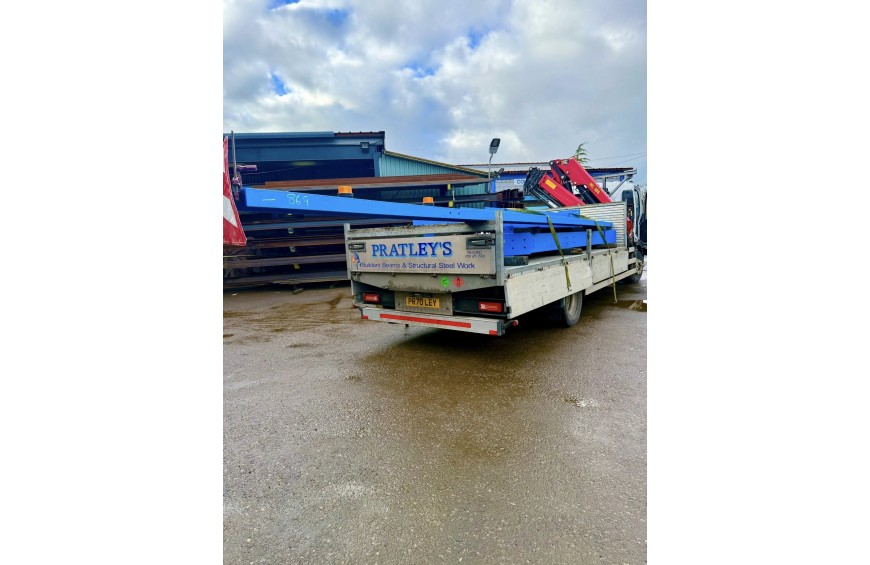
The moment when a laden lorry appears at your site carrying several hundred kilograms of steel beams represents a convergence point where planning meets reality. Your carefully designed structural scheme, meticulously calculated beam specifications, and detailed construction sequence all depend on getting that steel from the delivery vehicle to its installation location. This deceptively simple step—moving steel from road to building—proves surprisingly complex and frequently becomes the bottleneck that delays projects, inflates costs, or forces expensive plan changes when access realities clash with delivery assumptions.
Understanding how steel delivery actually works, what access constraints matter and which don't, how to plan around site limitations, and critically, what to verify before ordering rather than discovering during delivery prevents the cascade of problems that flow from inadequate logistics planning. Whether you're working on a straightforward suburban extension with reasonable access or a dense urban site where every meter of steel movement presents challenges, the principles of effective delivery planning remain constant: anticipate problems, verify assumptions, plan alternatives, and communicate clearly with everyone involved in the logistics chain.
How Steel Beam Delivery Actually Works
Before addressing access challenges, it's essential to understand what steel suppliers can and can't do, setting realistic expectations for what "delivery" includes.
Standard kerbside delivery represents the baseline service most steel suppliers provide. A lorry arrives at your site, parks as close to the property as legally and safely possible—typically on the road outside—and off-loads the steel using the vehicle's mounted crane or manual handling. The steel is placed on the kerb, pavement, or immediately adjacent to the vehicle's parking position. This is "delivery"—the steel has been transported to your site and off-loaded. What happens next is your responsibility unless specifically arranged otherwise.
Vehicle types and capabilities vary by supplier and order size. Small orders might arrive on a flatbed truck with tail-lift or small crane, suitable for residential streets. Larger orders come on articulated lorries with HIAB cranes capable of lifting several tonnes and reaching over obstacles. The vehicle arriving depends on your order value and what the supplier has available, not necessarily what your site needs—this is why communication about access requirements before ordering matters.
Driver capabilities and limitations need realistic understanding. Delivery drivers are skilled at operating their vehicles and mounted cranes, but they're not general lifting contractors. They can off-load steel from their vehicle to ground level at accessible locations. They won't carry steel through your house, lift it over garden walls, maneuver it down narrow alleyways, or hold it in position while you attach temporary supports. Their job is delivery to site, not installation assistance, and expecting more creates friction and disappointment.
Delivery timing and scheduling is less precise than many builders hope. Suppliers typically offer "morning" or "afternoon" delivery windows, sometimes narrowing to "before noon" or "after 1pm," but rarely committing to specific hours. The lorry is making multiple deliveries and facing traffic, previous site delays, and weather. Planning your day around an assumed 9am delivery time when the supplier committed only to "morning" sets you up for frustration. Some suppliers offer scheduled appointment deliveries for premium fees—worth considering if you're hiring cranes or labor that costs money while waiting.
Off-loading locations are limited by what the lorry can reach with its crane. HIAB cranes typically reach 6-10 meters horizontally from the vehicle, over obstacles up to 3-4 meters high, depending on crane capacity and beam weight. Heavier beams reduce reach; lighter loads can extend further. The driver will position steel where the crane can reach safely, considering overhead power lines, trees, building overhangs, and ground conditions. If your ideal storage location is 15 meters from where the lorry can park, the steel won't reach there—you'll need to move it yourself or arrange alternative lifting.
Site storage responsibility transfers to you the moment steel touches the ground. The supplier has fulfilled their delivery obligation. Securing the steel against theft, protecting it from weather damage, preventing trip hazards for public or trades, and ultimately moving it to installation location all fall to you. Sites without secure storage or means to move steel from delivery location to installation position face immediate problems the moment the lorry departs.
Weather and ground conditions affect what suppliers will attempt. Delivery lorries won't access unmade ground that risks bogging down, won't park on slopes that create instability, and may refuse delivery in severe weather when crane operation becomes unsafe. A site that's perfectly accessible in summer may prove impossible in winter when the unmade drive becomes a muddy bog. Verifying that delivery conditions will be adequate when the steel arrives, not just when you order it, prevents wasted journeys and delays.
Understanding these realities shapes effective planning. The supplier delivers steel to your site and off-loads it at accessible locations. Everything else—timing installation to match delivery, moving steel from kerb to building, storing it securely, and getting it into position—is your problem to solve through planning, equipment, and resources.
Access Assessment: What Actually Matters
Evaluating whether your site can accommodate steel delivery requires checking specific factors that determine feasibility.
Road access and parking for the delivery vehicle comes first. Can an articulated lorry or large flatbed truck reach your property? Many residential streets accommodate standard delivery vehicles, but cul-de-sacs with tight turning circles, roads with width restrictions, weight limits, or height barriers (low bridges, overhead cables) may exclude larger vehicles. Drive the route from the nearest main road to your site in a normal car, noting road widths, tight corners, low bridges, and any restrictions. If your car barely fits, a lorry won't.
Parking duration and restrictions matter because off-loading takes time. A small order might be off-loaded in 15-20 minutes; larger orders with multiple beams requiring careful crane work can take an hour or more. Can the lorry legally park for this duration? Residential streets with parking restrictions, loading bans during certain hours, or aggressive parking enforcement create problems. Red routes, clearways, and bus lanes are typically no-go for delivery vehicles even temporarily. Verify with local authority whether loading is permitted and for how long.
Vehicle positioning and stabilization requires adequate space and suitable ground. HIAB crane operation needs the lorry to deploy stabilizer legs—jack stands that prevent the vehicle tipping when lifting loads at extended reach. These stabilizers need 1-2 meters of clear space either side of the vehicle and solid ground to bear on. Soft verges, recently excavated ground, or areas undermined by services won't support stabilizers safely. The lorry also needs to park level—significant slopes prevent safe crane operation.
Overhead clearance includes power lines, telephone cables, tree branches, building overhangs, and any other obstacles above the lorry or crane path. Power lines are the critical hazard—maintaining safe clearance is non-negotiable and drivers will refuse to operate cranes where power line risk exists. Tree branches may need trimming before delivery, and building overhangs like projecting eaves or bay windows can prevent crane positioning close enough to reach delivery locations.
Crane reach to storage or installation location determines whether steel can be placed where you need it. Measure the horizontal distance from where the lorry can park to where steel must be placed. Account for obstacles the crane must lift over—walls, parked cars, sheds. If this distance exceeds 6-8 meters or requires lifting over obstacles taller than 3-4 meters, the delivery crane likely can't reach. You'll need the steel placed at kerb and alternative means to move it to where you need it.
Site access points for subsequently moving steel from delivery location to installation position need evaluation. Even if the delivery crane can't reach the final installation location, can steel be manhandled through the property to where it's needed? This requires measuring doorways, passages, gates, and internal access routes. A 5-meter long beam needs 5+ meters of clear straight access—it won't navigate tight corners or narrow passages. Side access along properties often provides the route from front to back, but 900mm wide alleys won't accommodate beams with 400mm+ overall width when you account for handling clearance.
Ground conditions and protection affect both vehicle access and subsequent steel movement. Can the delivery vehicle reach the site without crossing lawns, driveways, or surfaces that would be damaged by a heavy lorry? Do you need ground protection mats or temporary roadways? Where steel is placed, will the ground support the weight without damage? Steel beams concentrated on small bearing areas can sink into soft ground or damage paving.
Pedestrian and traffic management becomes important on busy roads or where delivery requires temporary road closure. Some authorities require traffic management plans, warning signs, or banksmen for deliveries that obstruct traffic flow. Failing to arrange this when required can result in the lorry being unable to off-load, wasting the delivery and requiring rescheduling.
The access assessment reveals whether standard delivery is straightforward, challenging but achievable with preparation, or impossible requiring alternative arrangements. Conducting this assessment before ordering, not when the lorry appears, provides time to solve problems rather than scrambling for emergency solutions.
Common Access Challenges and Solutions
Certain access problems appear repeatedly across construction sites, each with established solutions worth knowing before you face them.
Terraced houses with no side access represent the classic difficult delivery scenario. The steel arrives at the front kerb but needs to reach the rear extension or loft conversion. Solutions include: off-loading at the front and manually carrying steel through the house (only viable for lighter beams and robust access routes that won't be damaged), arranging crane lift over the property from the front to the back (requires mobile crane hire and probably neighbors' permission for over-sailing), scheduling delivery to coincide with other crane work already planned (efficient if a crane is attending for other purposes), or in extreme cases, temporarily removing sections of party wall or roof to create access (expensive and disruptive but sometimes necessary for large beams).
Narrow urban streets with parking congestion prevent delivery vehicles parking close enough to the property. Solutions include: arranging delivery during off-peak hours when parking is lighter (early morning weekends often work), paying neighbors to vacate parking spaces during delivery (£50-£100 goodwill payment often secures cooperation), hiring a banksman to manage traffic flow while the lorry blocks the street briefly (adds cost but enables safer delivery), or using smaller delivery vehicles that can navigate congestion better (may cost more or require multiple trips for large orders).
Sites behind other properties or at the end of long driveways where the delivery vehicle can't reach due to width, surface, or access restrictions require shuttling steel from the drop-off point to the site. Solutions include: hiring a telehandler or forklift for the delivery day to shuttle steel from roadside to site (£200-£400 per day typically), using smaller farm tractors or site vehicles with lifting capacity (cheaper than telehandlers if available), arranging manual handling with sufficient labor (viable for lighter beams over shorter distances), or storing steel at the accessible drop-off point and moving it progressively as needed during construction (reduces immediate handling requirements but creates security and logistics complications).
Upper floor or loft deliveries in multi-storey buildings where steel must reach above ground level face significant challenges. Solutions include: mobile crane hire to lift steel from street level over the building to the upper floor (expensive at £800-£2,000+ for half-day but often the only viable option), scheduling delivery to coordinate with scaffolding or hoist equipment already on site (reduces dedicated lifting costs), using material hoists or goods lifts in commercial buildings (if available and rated for the weight), or breaking down back-to-back beam assemblies into individual sections that can be lifted separately and joined at height (lighter individual lifts but requires careful assembly planning).
Conservation areas or listed buildings where crane operation over the property or large vehicle access faces planning or conservation constraints require sensitive approaches. Solutions include: advance consultation with conservation officers to agree access methodology (prevents last-minute objections), scheduling delivery outside of protected times or using approved methods (conservation areas sometimes restrict construction timing), using smaller vehicles and manual handling to minimize impact (more labor-intensive but reduces visual and physical intrusion), or seeking temporary consent for necessary access measures (formal but provides legal protection).
Sites with active services crossing access routes such as overhead power lines, underground gas mains, or fiber optic cables need careful planning. Solutions include: arranging temporary disconnection or protection of services (power companies will temporarily insulate or divert lines for construction access), re-routing access to avoid service conflicts (may require neighbors' cooperation or temporary easements), timing delivery to coincide with planned service work (efficient but requires coordination), or using specialized equipment like insulated crane jibs that maintain safe clearance from power lines (available but expensive).
Weather-vulnerable sites where ground conditions deteriorate in wet weather need contingency planning. Solutions include: scheduling delivery during favorable weather windows (requires flexibility and weather monitoring), installing temporary roadways or ground protection before delivery (trackway mats, geotextile and stone, or temporary roadway panels), arranging immediate steel relocation to dry storage if delivery must proceed in poor conditions (have plan B ready), or deferring delivery until conditions improve (delays project but prevents damage and safety issues).
Theft-vulnerable locations where steel must be stored at accessible but insecure locations create security challenges. Solutions include: arranging delivery to coincide exactly with installation (minimizes storage duration), installing temporary secure storage enclosures or lockable containers (adds cost but protects materials), having site security or personnel present during storage period (labor cost but prevents theft), marking steel with identifiable markings that deter theft and aid recovery (steel with visible site markings is harder to resell), or arranging insurance for materials while in storage (transfers financial risk though doesn't prevent theft inconvenience).
The commonality across these solutions is forward planning. Each challenge has workable solutions when anticipated, but creates expensive emergencies when discovered during delivery. The access assessment identifies which challenges you face, allowing you to implement appropriate solutions before the steel arrives.
Planning Delivery Timing Around Site Readiness
When steel arrives matters almost as much as how it arrives, with delivery timing affecting costs, safety, and project flow.
Installation readiness should drive delivery timing rather than arbitrary dates. Order steel to arrive when you're actually ready to install it, not weeks earlier because you want it "on site just in case." Steel stored on site faces theft risk, weather exposure, damage from other site activities, and creates obstacles to other work. The ideal delivery timing is 1-3 days before installation, providing buffer against minor delays while minimizing storage duration.
Temporary support completion needs to precede beam delivery. The worst scenario is steel arriving while you're still installing temporary props or establishing temporary support for the loads the beam will carry. The steel sits idle, in the way, vulnerable to damage, while work that should have been completed before delivery gets finished around it. Complete all temporary works before steel delivery, verify they're adequate, and have the site ready for beam installation to begin immediately when steel arrives.
Trade coordination prevents conflicts where the steel delivery disrupts other site activities or vice versa. If groundworkers are excavating, plasterers are finishing ceilings below, or electricians are installing sensitive equipment, steel delivery and installation creates dust, vibration, and access disruption that interferes with their work. Sequence trades so beam installation happens during appropriate windows—typically after messy groundworks and first-fix carpentry but before finishes and sensitive installations.
Crane and lifting equipment scheduling must align with steel delivery when you're hiring mobile cranes or other lifting equipment for installation. Nothing wastes money faster than paying £1,200 for a mobile crane sitting idle because the steel delivery is delayed two hours. Either schedule delivery conservatively early before crane arrival (accepting steel might sit overnight if delivery arrives late), arrange crane hire with flexible timing (costs more but reduces wasted crane time), or use suppliers who commit to specific delivery windows that coordinate with crane bookings.
Labor availability for off-loading and installation should be confirmed before delivery. You need sufficient people on site when steel arrives to assist with off-loading, sign for the delivery, move steel to storage locations, and begin installation work. Steel arriving when you're short-handed creates problems—the delivery driver won't wait around for hours while you scramble to find help, yet insufficient labor makes handling dangerous or impossible.
Weather windows for installation should inform delivery timing, particularly for work exposed to weather. There's little value in steel arriving during a week of heavy rain if the installation work requires working in exposed locations where rain makes the work unsafe or damages surrounding building fabric. Monitor weather forecasts and schedule delivery to arrive during favorable conditions.
Building Control inspection scheduling coordinates with beam installation work, and steel delivery should account for inspection requirements. Some authorities want to inspect temporary support before beam installation begins, or inspect bearing pockets before beam installation, or attend during beam installation. Delivery before these inspections pass creates steel sitting on site waiting for approval to proceed. Understand inspection requirements and timing, then schedule delivery to flow logically through the approval process.
Site security during storage if steel must be stored for any duration needs to be arranged before delivery. Will the site be occupied continuously, or locked and left overnight? Do you have secure storage areas, or will steel sit exposed? If storage duration extends beyond a day or two, what security measures prevent theft? These questions should be answered before delivery, not discovered as problems after the steel arrives.
Access equipment rental duration needs to match delivery and installation timelines. If you're hiring a telehandler, scaffold tower, or other access equipment to facilitate steel handling, ensure the hire period covers the delivery day plus installation days with adequate buffer. Running out of hired equipment before steel is installed creates expensive complications.
The optimal delivery timing often appears obvious in retrospect—arrived Tuesday, installed Wednesday—but achieving this requires coordinating multiple factors ahead of time. Builders who treat delivery as a passive event that "just happens" when the supplier schedules it discover problems; builders who actively manage delivery timing as part of critical path scheduling find the work flows smoothly.
Lifting Equipment: When Delivery Cranes Aren't Enough
Many sites need lifting capability beyond what the delivery vehicle's crane provides, requiring additional hired equipment or creative handling solutions.
Mobile cranes represent the comprehensive solution for difficult access situations. A mobile crane can lift beams over buildings, across obstacles, and into upper floors with reaches and capacities far exceeding delivery vehicle cranes. However, they're expensive—typically £800-£2,000+ for half-day hire—and require adequate access themselves. Mobile cranes need firm, level ground for stabilizer setup, clear approaches for the crane vehicle, and sufficient space to maneuver. Using mobile cranes effectively means coordinating delivery to provide steel on the ground ready to lift, having all installation preparation complete so lifting happens efficiently, and maximizing crane time by completing all high-level work possible during the hire period.
Telehandlers and forklifts suit sites where steel needs moving horizontally or to modest heights. A telehandler can shuttle steel from roadside delivery point to the rear of properties, lift steel to first-floor height, or position beams ready for manual handling into final location. Daily hire costs £150-£400 depending on capacity and reach, making them more economical than mobile cranes where full crane capability isn't necessary. Telehandlers need clear access routes, adequate headroom, and ground conditions suitable for their weight and outriggers.
Material hoists and builder's hoists on larger sites provide means to lift steel vertically to working levels. If you're already hiring a hoist for general material handling, utilizing it for beam delivery makes economic sense. However, hoists have weight limits (typically 500-1,000kg for builder's hoists) that may exclude heavier beams, and loading/unloading is manual requiring adequate labor.
Scaffold towers and gantry systems create temporary elevated platforms from which beams can be lifted into upper floor locations. Scaffold tower with block and tackle or chain hoist provides low-tech but effective means to lift steel vertically where other options aren't available. This is labor-intensive and only suits lighter beams—typically 150kg maximum safely—but represents accessible technology costing hundreds rather than thousands.
Manual handling techniques suffice for lighter beams over short distances with adequate labor. Three to four people can safely carry a 4-meter 203 x 133 x 30 UB (120kg) through a house or along an alley to rear access, provided the route is clear and suitable. Manual handling requires appropriate technique, adequate people, clear communication, and realistic assessment of what's safe. Trying to manhandle beams beyond your team's capability causes injuries and property damage.
Beam bogies and roller systems facilitate moving heavy beams horizontally across flat surfaces. Simple beam bogies—wheeled platforms that support beam ends—allow one or two people to move beams that would be impossible to carry. These work well for moving steel across yards, through wide passages, or along level surfaces. Combined with telehandlers or cranes to get steel onto the bogies, this creates efficient horizontal transport.
A-frames and gin poles provide temporary lifting capability for vertical or near-vertical lifts in confined spaces. An A-frame positioned over a loft hatch with chain hoist can lift beams vertically through the hatch into the loft. This is specialist equipment requiring understanding of rigging and safe working loads, but for sites where conventional lifting equipment can't access, it provides workable solutions.
Hiring operators with equipment often proves more cost-effective and safer than hiring equipment alone. An experienced telehandler or crane operator knows safe working practices, understands equipment limitations, and can complete lifts efficiently that inexperienced operators struggle with. The modest premium for operator hire (£150-£300 additional) frequently saves time and prevents damage that self-operation might cause.
Combining lifting methods in sequence moves steel through access challenges no single method could solve. Delivery crane lifts steel from lorry over front wall to front garden, telehandler shuttles it through side access to rear, scaffold tower with block and tackle lifts it to first floor, manual handling positions it on temporary supports ready for installation. Planning these combinations before delivery ensures necessary equipment is on site when needed.
The lifting equipment decision depends on understanding exactly what movements are required—horizontal distance, vertical height, obstacles to overcome, steel weight and dimensions—then selecting the combination of equipment that achieves the required movements within budget. The most expensive mistake is hiring inadequate equipment that can't complete the lifts, forcing additional hire or last-minute alternative arrangements.
Communication with Suppliers and Hauliers
Clear communication with everyone in the supply and delivery chain prevents surprises and enables suppliers to provide appropriate service.
Access information at ordering should include specific details about delivery constraints. Don't just provide a postcode and assume the supplier will handle it. Explain: "Terraced house, steel needs placing in rear garden accessible by 1.2m wide side passage only" or "Articulated lorries can't access our street due to width restrictions, please use smaller vehicle." This allows suppliers to plan appropriate vehicles and set correct expectations rather than discovering problems on delivery day.
Specific delivery location requirements need stating explicitly. "Place steel in the front driveway" or "Can you reach over the side boundary wall to place steel in the rear garden?" or "Steel must remain at kerbside, we'll collect from there." Don't assume the delivery driver will intuit where you want steel—tell the supplier clearly and confirm they can achieve this.
Timing constraints and special requirements should be communicated when ordering. "We need morning delivery before 10am because we're hiring a crane at 11am" is important information that suppliers can accommodate (possibly for a premium) if told in advance, but can't magically arrange if mentioned only when the driver calls to say he's 30 minutes away at 2pm.
Contact information and site access details ensure smooth delivery day coordination. Provide mobile numbers that will be answered, site address that delivery drivers can navigate to (not just postcode if it's ambiguous), and instructions for accessing the site if it's behind gates or barriers. "Call this number on arrival and we'll open the site gates" prevents drivers arriving at locked gates unable to proceed.
Pre-delivery confirmation a day or two before scheduled delivery verifies everything is still on track. A quick call to the supplier confirming "Still expecting delivery Tuesday morning, correct?" catches scheduling changes before you've mobilized labor and equipment expecting steel that won't arrive.
Delivery day contact ensures the driver can reach you if problems arise. Drivers encountering access issues, traffic delays, or questions about where to place steel need to contact someone with authority to make decisions. A mobile number answered by someone on site who can guide the driver prevents aborted deliveries.
Post-delivery feedback to suppliers about how delivery went helps them improve service and helps you establish working relationship for future orders. If delivery was excellent, tell them—suppliers value good customers. If problems occurred, explain constructively what would improve future deliveries. "The driver needed clearer access instructions, suggest noting that side gate is located at rear corner not front" helps both parties.
Documentation and sign-off at delivery requires checking steel quantities, section sizes, and visible condition before signing delivery notes. The delivery note signature confirms you've received the steel as described. If beam sizes are wrong, quantities short, or damage visible, note this on the delivery documentation before signing. Discovering problems after the driver has left creates warranty and replacement complications.
Changes and problems should be communicated immediately, not hoped to resolve themselves. If your site conditions change between ordering and delivery—access route is blocked, ground is too soft, different vehicle is needed—tell the supplier as soon as you know. They can reschedule, arrange alternative vehicles, or suggest solutions. Hoping it will work out on delivery day rarely ends well.
The suppliers and hauliers want successful deliveries as much as you do—failed deliveries cost them time and money. Treating them as partners who need accurate information to provide good service, rather than adversaries to negotiate against, produces better outcomes. Clear communication, realistic expectations, and professional conduct create relationships where suppliers go the extra mile to help solve problems.
Site Preparation Before Delivery Day
The work done before steel arrives determines whether delivery proceeds smoothly or devolves into chaos.
Clear access routes from where the delivery vehicle parks to where steel will be placed or stored. Remove parked cars from streets, clear driveways and passages of obstructions, trim overhanging branches that would impede crane operation, and verify that gates are open and lockable access is unlocked. The delivery driver shouldn't have to wait while you move vehicles, find gate keys, or clear obstacles that should have been removed in advance.
Prepared storage locations ready to receive steel include level ground that won't be damaged by steel weight, adequate space for the quantity of steel arriving, and secure arrangements if steel will be stored overnight or longer. Laying sleepers, old scaffold boards, or pallets creates a base that protects both the steel and the ground beneath. Marking out where steel should be placed helps delivery drivers position it accurately.
Temporary roadways or ground protection if the delivery vehicle or lifting equipment must cross vulnerable surfaces. Trackway mats, scaffold boards over soft ground, or geotextile and stone roads protect lawns, driveways, and soft surfaces from vehicle damage. This preparation is easier before delivery than attempting to improvise after a laden lorry is already stuck or has damaged your drive.
Notification to neighbors if delivery will cause temporary disruption, noise, or require their cooperation (like moving vehicles or providing access through their property) demonstrates professional courtesy and often secures cooperation that would be grudgingly given or refused if requested only when the lorry arrives.
Site induction for delivery driver can be prepared as simple written instructions if site access is complex. A sketch showing vehicle parking location, access route, steel placement area, and any hazards or restrictions helps drivers unfamiliar with your site understand the situation quickly. This is particularly valuable for sites with non-obvious access or multiple areas where steel could be placed.
Safety equipment and signage if delivery requires working near roads, managing pedestrian traffic, or other public interface. High-visibility vests, warning signs, barriers to protect the public from lifted loads, and appropriate safety measures should be on site and ready before the lorry arrives.
Tools and equipment for off-loading assistance if you're providing manual help moving steel from delivery location. Steel lifting slings, gloves for safe handling, trolleys or beam bogies if using them, and any tools needed to secure or protect steel after delivery should be on site and ready to use.
Verification of ground conditions including checking that recent rain hasn't made ground too soft, that winter frost hasn't created slippery conditions, or that other site work hasn't created hazards or obstacles that didn't exist when you planned the delivery. A quick site walk-through the morning of delivery catches problems you can still address before the lorry arrives.
Personnel on site and ready means having sufficient people available when delivery is expected, briefed on their roles, equipped with appropriate safety gear, and prepared to assist as needed. The worst deliveries happen when steel arrives and the site is short-handed, with people scrambling to find additional help while an expensive delivery lorry waits.
Building Control notification if inspections are required before, during, or immediately after delivery should be arranged in advance. Don't discover on delivery day that Building Control needed to inspect bearing pockets before steel installation could proceed.
The theme across preparation is eliminating surprises and variables. Delivery day should be execution of a pre-planned operation, not improvised problem-solving as the lorry waits and the driver grows impatient. Every minute spent on preparation saves ten minutes of flustered activity during delivery.
Storage and Protection: The Overlooked Phase
Steel arriving on site begins a storage phase that continues until installation, requiring attention to prevent theft, damage, or deterioration.
Theft prevention matters more than many builders recognize. Steel has scrap value and is easily stolen, particularly standard sections that aren't obviously site-specific. Solutions include: storing steel in locked secure areas (lockable containers, fenced compounds, buildings), positioning it where theft requires vehicle access you can control (deep in site, behind locked gates), marking steel with identifiable site marks in paint (deters opportunistic theft), or arranging rapid installation that minimizes storage duration (best solution if viable).
Weather protection prevents rust formation that can complicate installation and affect surface preparation for painting. New steel arrives with mill scale that provides some protection, but cut ends, damaged areas, or prolonged exposure will develop surface rust. Covering steel with tarpaulins, storing in dry areas, or elevating it off wet ground all reduce weather exposure. For extended storage periods, consider rust preventive coatings.
Protection from site damage keeps steel free from impact damage, coating damage, or contamination with concrete, paint, or other site materials. Steel stored in active work areas gets damaged—forklifts reverse into it, materials drop on it, trades trip over it and abuse it. Designate steel storage away from high-traffic areas with physical barriers preventing vehicle or equipment contact.
Organized storage with similar sections grouped, clearly marked, and accessible for retrieval prevents the frustrating search through a jumbled pile trying to identify which beam is which. Label beams with their specifications or reference numbers matching drawings, stack similar sections together, and maintain clear access to retrieve specific pieces without moving the entire stock.
Ground contact and support should elevate steel off direct ground contact using sleepers, blocks, or pallets. This prevents ground moisture wicking into steel, allows air circulation reducing condensation, and keeps steel clean of ground dirt. Support beams at multiple points along their length to prevent sagging or distortion—long beams supported only at ends may bow under their own weight.
Pest prevention in stored hollow sections or sections with flanges that create nesting spaces requires attention in areas with rodent problems. Hollow sections can be capped with tape or plastic, and regular inspection catches problems before they become established.
Security of fixings and accessories delivered with beams—bolts, bearing plates, brackets—requires separate secure storage. These small items are easily lost or stolen and may have long lead times for replacement. Store them in locked toolboxes or containers, maintaining organization that allows retrieving specific items when needed.
Documentation and inventory control tracking what steel is on site, what's been used, and what remains helps prevent ordering shortages or discovering during installation that the section you need was never delivered. A simple spreadsheet or written inventory checked against delivery notes and updated as steel is installed prevents unpleasant surprises.
Progressive protection of installed steel pending final finishes includes removing mill debris from bearing surfaces, protecting from concrete splashes during floor pouring, preventing rust formation at connections awaiting final tightening, and generally maintaining steel in good condition through the construction period.
Storage receives inadequate attention because it's not the exciting installation phase, but poor storage creates real costs through theft, damage, or deterioration that could have been prevented by basic precautions implemented before delivery.
Special Cases: Challenging Delivery Scenarios
Some delivery situations present unique challenges requiring specialist solutions.
Island and remote locations with ferry access or long haul distances from steel suppliers face extended delivery times and higher costs. Solutions include: consolidating orders to reduce delivery trip frequency (order all steel in one shipment rather than multiple small orders), scheduling deliveries to coordinate with ferry schedules (avoiding overnight ferry waits that inflate costs), considering local steel stockholders even if prices are higher (reduced delivery costs may offset material premiums), or in extreme cases, arranging your own collection if you have suitable transport.
City center sites with congestion charging, vehicle restrictions, or parking enforcement create delivery complications. Solutions include: arranging early morning deliveries before restrictions apply (many congestion charges start after 7am), obtaining temporary loading permits from local authorities (available for construction deliveries in many areas), paying the congestion charge as part of delivery cost (factor this into overall project costs), or using smaller delivery vehicles exempt from restrictions (couriers with small vans for modest steel quantities).
Sites with no vehicle access such as pedestrian-only areas, sites accessed only by footpaths, or locations where vehicles physically can't reach require creative delivery. Solutions include: off-loading at the nearest vehicle-accessible location and manual transport to site (labor-intensive but sometimes only option), using specialized small vehicles like tracked carriers that can negotiate footpaths (available for hire in some areas), arranging crane lifts over intervening buildings or obstacles (expensive but may be only viable approach), or temporarily creating vehicle access by installing ground protection or temporary roadways (capital cost but enables multiple deliveries).
Environmentally sensitive sites with protected trees, conservation restrictions, or ground conditions that limit equipment use require sensitive delivery approaches. Solutions include: arboricultural supervision during delivery and lifting to ensure tree protection (required in some conservation areas), using ground protection more extensively than typical (prevents compaction damage to root systems), timing deliveries to minimize disturbance (avoiding bird nesting seasons, minimizing weekend work in residential areas), or accepting higher costs for smaller equipment that reduces impact (smaller cranes, manual handling, extended timelines).
Multi-tenanted buildings requiring steel delivery to one unit within a larger complex face access coordination challenges. Solutions include: advance coordination with building management and other tenants (book loading docks, arrange access times), scheduling delivery during off-peak hours that minimize disruption (early mornings, weekends if permitted), hiring banksmen to manage interface with other building users (maintains safety and reduces disruption), or accepting restrictions on delivery vehicle types or timing that building management imposes.
Secure sites with controlled access, security screening, or restricted entry procedures need delivery planning that accounts for security processes. Solutions include: advance notification to security with vehicle details and expected timing (enables pre-authorization), escort arrangements for delivery vehicles within secure perimeters (security personnel or nominated staff), temporary access permits for delivery vehicles and drivers (processed in advance of delivery), or consolidating deliveries to reduce security processing frequency.
The commonality across these special cases is the need for earlier, more detailed planning than standard deliveries require. Site-specific challenges don't have off-the-shelf solutions but rather require understanding the constraints and creatively working within them or arranging exceptions where possible.
Cost Implications of Access Challenges
Understanding how site access affects project costs helps budget realistically and make informed decisions about access solutions.
Premium delivery charges apply when standard delivery isn't possible and suppliers must arrange special vehicles, extended delivery windows, or additional services. Expect 20-50% premium over standard delivery for difficult access, restricted timing, or out-of-area locations. This might be £100-£300 additional on an order where standard delivery included £200-£400 delivery charge.
Crane and lifting equipment hire represents the largest access-related cost for difficult sites. Mobile crane hire ranges £800-£2,000+ for half-day, telehandler hire £150-£400 per day, material hoists £200-£600 per week. Needing these where straightforward sites wouldn't adds substantial costs that must be budgeted.
Additional labor costs for manual handling, moving steel from delivery point to installation location, or extended installation timelines due to access complications typically add £300-£1,000 to labor costs on affected projects. This includes extra personnel for lifting, extended working hours, or hiring specialist labor like crane operators or banksmen.
Ground protection and temporary access costs for trackway mats, temporary roadways, or surface protection range £200-£2,000 depending on extent and duration. Buying materials like geotextile and stone for permanent access improvement can run £1,000-£5,000 but provides lasting value.
Service relocation or protection when utilities conflict with access routes can be expensive. Temporary overhead power line insulation costs £500-£2,000, underground service diversions £2,000-£10,000 or more, and even temporary service protection barriers add £200-£800.
Planning and coordination costs including traffic management, parking suspensions, or special access permits typically add £200-£1,000 in fees, permits, and professional services for sites requiring formal arrangements.
Security and loss prevention for extended storage periods includes fencing, lighting, security personnel, or insurance premiums that might total £300-£2,000 for projects with significant security challenges.
Delay costs when access problems cause project delays include ongoing site rental, extended equipment hire, additional supervision costs, and potentially contract penalties or lost opportunity costs. Even one week's delay can cost £1,000-£5,000 when all indirect costs are considered.
Opportunity costs of choosing easier access solutions that compromise other aspects—like smaller beam sections requiring more beams, or different structural solutions that avoid difficult access—may increase structural costs by £1,000-£5,000 while saving £500-£2,000 in access costs, resulting in net cost increase.
The access cost analysis should inform decisions about whether to accept access challenges and budget appropriate costs, versus exploring alternative structural solutions that avoid the access problems entirely. Sometimes specifying different beam positions that create better access, or using built-up sections that can be carried in pieces rather than single heavy beams, reduces overall project cost despite higher structural material costs.
Conclusion: Logistics as Core Project Planning, Not Afterthought
The transition of steel from supplier's yard to installed structural element represents a logistics chain where failure at any point stops the project. Treating delivery and access as afterthoughts discovered when the lorry arrives creates the cascading problems that turn straightforward beam installations into expensive complications: steel arriving to inaccessible sites requiring emergency crane hire at premium rates, beams stored insecurely overnight and stolen, delivery vehicles unable to complete off-loading and departing with steel still aboard, or installations delayed weeks while access problems discovered too late get resolved.
The antidote to these problems is planning that treats logistics as a first-order design consideration, not an implementation detail. Before finalizing beam specifications and positions, before ordering steel, before scheduling installation work, verify the logistics: Can delivery vehicles access the site? Can the delivery crane reach storage locations? If not, what lifting equipment is needed? How will steel move from delivery point to installation position? What's the critical path from order placement through delivery to installation, and what dependencies exist between these phases?
This planning requires time investment—perhaps a few hours across site visits, supplier discussions, equipment quotes, and logistics coordination—but saves days or weeks of delays and hundreds or thousands of pounds in emergency solutions and complications. The builders and self-builders who experience smooth beam deliveries, steel arriving exactly when needed and placed exactly where required, aren't lucky—they're organized. They've done the unglamorous work of measuring access routes, confirming vehicle clearances, arranging lifting equipment before delivery day, and coordinating everyone involved in the logistics chain.
For sites with straightforward access—suburban properties with wide streets, clear driveways, and conventional layouts—this planning confirms that standard delivery will work fine and installation can proceed as anticipated. For sites with challenging access—urban terraced houses, remote locations, conservation areas—this planning identifies problems while solutions are still affordable and schedulable rather than discovering constraints when costly emergency solutions are the only option.
The pattern across successful beam deliveries is consistent: thorough access assessment before ordering identifies constraints and requirements, clear communication with suppliers enables appropriate delivery arrangements, adequate site preparation before delivery day ensures smooth off-loading, and appropriate lifting equipment and labor are arranged matching the specific access challenges. None of this is complex or highly technical—it's methodical planning and execution of logistics basics. But the discipline to do this planning, and the foresight to do it early in the project cycle rather than belatedly when delivery looms, separates projects that flow smoothly from those that stumble through expensive complications.
Start every project involving structural steel by walking the delivery route from road to installation position, measuring doorways and passages, identifying obstacles and constraints, and honestly assessing whether standard delivery will work or special arrangements are needed. This simple site logistics audit, done before ordering steel, before booking installation dates, before commitments are made, provides the foundation for realistic planning that accommodates site realities rather than hoping reality will accommodate optimistic assumptions. The hour spent on this assessment saves the days spent solving problems that better planning would have prevented, and often saves more money than any other single project management activity.
Steel beam delivery and access isn't the glamorous phase of construction—it's heavy, dirty, logistically complex work that gets little attention in aspirational renovation content. But it's the difference between projects that succeed and those that struggle, between budgets that hold and those that explode with unanticipated costs, and between schedules that are met and those that slip into extended delays. Give logistics the attention it deserves, plan thoroughly, communicate clearly, and execute methodically. Your steel will arrive when needed, be positioned where required, and be installed successfully—transforming what could be a stressful bottleneck into a routine project milestone achieved professionally and efficiently.

Submit comment Cancel Reply