

When planning structural work, knowing the weight of a steel beam is essential. Whether you’re arranging delivery access, hiring lifting equipment, or checking floor load limits, understanding how much your beam weighs can prevent costly mistakes and improve site safety.
This guide explains how beam weight is measured, what affects it, and provides typical examples of RSJ (Rolled Steel Joist) and UB (Universal Beam) weights used in UK construction.
Why Beam Weight Matters
Steel beams are strong, durable, and space-efficient—but they’re also heavy. Before ordering, builders and homeowners should consider:
-
Handling and installation: Can the beam be lifted manually, or is machinery required?
-
Transport and access: Will the beam fit through doorways or be carried upstairs safely?
-
Support and foundations: The structure beneath must bear both the beam’s own weight and the loads above.
-
Cost and logistics: Heavier beams may increase delivery or crane hire costs.
Knowing the exact weight per metre helps you plan each of these factors accurately.
How Beam Weight Is Calculated
Each steel beam section is identified by three main numbers, for example:
203 x 133 x 30 UB
Here’s what they mean:
-
203 mm: The depth (height) of the beam
-
133 mm: The width of the flange
-
30 kg/m: The weight per metre
So, a 203x133x30 UB weighs 30 kilograms per metre of length.
If your beam is 4 metres long:
4m × 30kg/m = 120kg total weight
This simple formula applies to all standard beam types.
Common UK Steel Beam Types
There are two main types used in domestic and commercial projects:
-
UB (Universal Beam): The traditional I-shaped RSJ used for horizontal spans and wall removals.
-
UC (Universal Column): Similar shape but heavier and squarer; often used vertically as columns or posts.
The weight difference between a UB and UC of similar depth can be significant, so always confirm which section your engineer specifies.
Typical RSJ and UB Weights by Size
Below is a practical beam weight chart showing average values for the most common sections used in UK building projects. Figures are approximate and may vary slightly by manufacturer.
| Beam Size (UB) | Weight per Metre (kg/m) | Approx. 3m Beam Weight | Approx. 5m Beam Weight | Typical Use |
|---|---|---|---|---|
| 152 x 89 x 16 | 16 kg/m | 48 kg | 80 kg | Small openings, single-storey loads |
| 178 x 102 x 19 | 19 kg/m | 57 kg | 95 kg | Light domestic beams |
| 203 x 102 x 23 | 23 kg/m | 69 kg | 115 kg | Standard residential spans |
| 203 x 133 x 30 | 30 kg/m | 90 kg | 150 kg | Medium openings, typical wall removals |
| 254 x 102 x 28 | 28 kg/m | 84 kg | 140 kg | Supporting upper floors |
| 254 x 146 x 37 | 37 kg/m | 111 kg | 185 kg | Large openings or heavier loads |
| 305 x 102 x 28 | 28 kg/m | 84 kg | 140 kg | Long but light spans |
| 305 x 165 x 40 | 40 kg/m | 120 kg | 200 kg | Heavy domestic or small commercial spans |
| 356 x 171 x 51 | 51 kg/m | 153 kg | 255 kg | High-load or multi-storey projects |
| 406 x 178 x 54 | 54 kg/m | 162 kg | 270 kg | Long spans, heavy structures |
These are uncoated beam weights and do not include paint, primer, or connection plates.
Weight Comparison: UB vs UC Sections
Universal Columns (UC) are more compact but denser. For instance:
| Column Size (UC) | Weight per Metre (kg/m) | 3m Weight | 5m Weight |
|---|---|---|---|
| 152 x 152 x 23 UC | 23 kg/m | 69 kg | 115 kg |
| 203 x 203 x 46 UC | 46 kg/m | 138 kg | 230 kg |
| 254 x 254 x 73 UC | 73 kg/m | 219 kg | 365 kg |
These are often used where vertical loads dominate, such as in frames or supports beneath beams.
How Beam Weight Affects Installation
Manual vs. mechanical lifting
A single person can typically handle around 25–30 kg safely, meaning most RSJs require at least two people or lifting gear. Once beams exceed about 4 metres or 100 kg, mechanical assistance becomes essential.
Cranes and hoists
For larger beams (150–300 kg+), you may need:
-
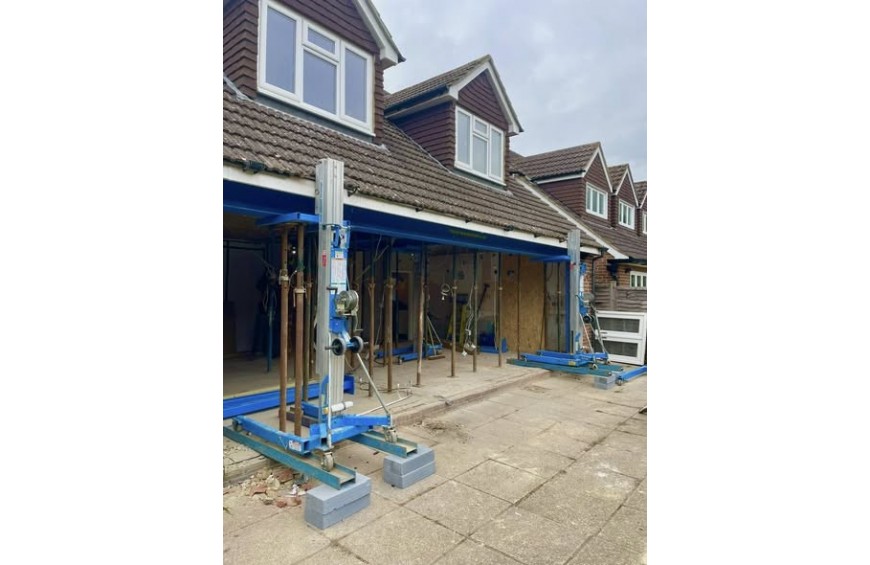
A genie lift or A-frame gantry for indoor lifts
-
A mobile crane for site installation
-
Adequate ground access and clearance
Bearing and support
Remember that the total beam weight adds to the dead load on your supports. Padstones or columns must be designed accordingly.
Beam Length and Transport
Most steel stockholders can deliver beams up to 6–7 metres long in a single piece. Longer sections may require:
-
Special delivery vehicles with crane offload
-
Cutting and on-site bolting (spliced beams)
-
Access checks for delivery routes and door widths
Knowing your beam’s exact length and weight in advance helps prevent surprises during delivery.
Estimating Beam Weights Quickly
To make planning easier, use this simple method:
-
Identify your beam’s designation (e.g., 203x133x30 UB).
-
Multiply the weight per metre (30) by the length in metres.
-
Add ~5–10% if you’re including paint, plates, or fittings.
Example:
A 203x133x30 UB, 4.5 metres long = 4.5 × 30 = 135 kg
Add 10% for fittings = ~150 kg total handling weight
Practical Tips for Builders and Homeowners
-
Plan your lift early: Arrange enough labour or lifting gear for the day of installation.
-
Measure access routes: Check stairs, doors, or tight corners if the beam must pass through the house.
-
Support safely: Always use proper temporary supports (Acrows, Strongboys) before removing walls.
-
Consult your supplier: Reputable suppliers can confirm exact weights from manufacturer data.
-
Store safely: Keep beams flat, supported, and away from damp surfaces until installation.
Where to Source Accurate Beam Weights
At Pratleys, we supply RSJs, UBs, and UCs cut to precise length, complete with mill certificates and verified weight data. Whether you’re a professional builder or a homeowner tackling a renovation, we can:
-
Confirm beam weight and load capacity
-
Provide cutting, drilling, and priming services
-
Offer quick, nationwide delivery
-
Coordinate with your engineer or contractor for exact specifications
Having accurate weight data from your supplier ensures your project runs smoothly from design to installation.
Final Thoughts
Steel beam weight is more than a number — it’s a key factor in planning, safety, and cost. Understanding how to read beam designations, calculate total weight, and plan logistics makes your project safer and more efficient.
Use the weight-per-metre figures as a guide, but always confirm with your structural engineer or supplier before ordering. For reliable, certified beams and expert advice, contact Pratleys — your trusted partner for RSJ supply, cutting, and delivery across the UK.
Search terms targeted:
RSJ beam weight chart, UB steel beam weight, beam weight by size, steel beam kg per metre, RSJ weight guide UK

Submit comment Cancel Reply