

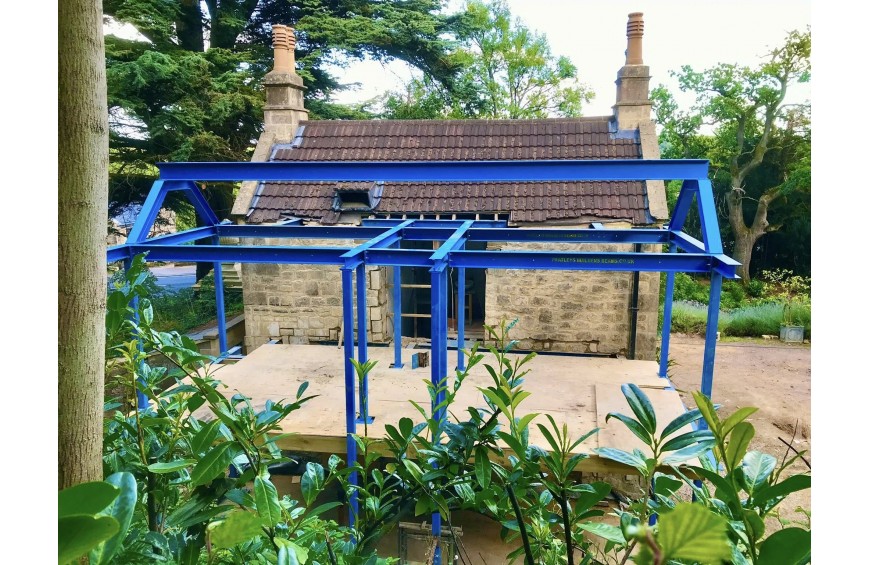
Understanding the journey from initial inquiry to steel beams arriving on your building site helps you plan projects effectively, set realistic timelines, and appreciate the craftsmanship involved in creating structural components for your home or commercial building. This detailed guide walks through each stage of the steel fabrication process, explaining what happens at every step and how long each phase typically takes.
Stage 1: Initial Enquiry and Quotation (1-3 Days)
The steel fabrication journey begins when you or your builder contacts a fabricator with details about your project requirements.
What Information Fabricators Need
Steel fabricators require specific information to provide accurate quotations. At minimum, they need structural engineering drawings showing beam sizes, lengths, connection details, and load requirements. These drawings, produced by your structural engineer, specify exactly what steel components your project needs.
If engineering drawings aren't yet available, fabricators can work from site measurements and general requirements to provide preliminary estimates. However, detailed quotations require proper engineering specifications to ensure accuracy.
Additional helpful information includes project timelines, access constraints for delivery, coating requirements (galvanizing, painting, fire protection), and whether installation services are needed alongside supply.
How Quotations Are Prepared
Experienced estimators review engineering drawings and calculate material quantities, fabrication time, surface treatment costs, and delivery requirements. They consider steel grade specifications, section sizes, cutting complexity, welding requirements, hole drilling, and any special features.
Steel prices fluctuate based on global market conditions, so quotations typically remain valid for 30 days. Fabricators with good supplier relationships can often provide competitive pricing through bulk purchasing and efficient material utilization.
Most fabricators provide detailed quotations breaking down material costs, fabrication charges, surface treatments, delivery, and any additional services. This transparency helps you understand exactly what you're paying for and compare quotes meaningfully.
Typical Turnaround
Simple residential projects with straightforward beam requirements often receive quotations within one working day. More complex commercial projects requiring detailed take-offs and multiple configurations may take two to three days for comprehensive quotations.
Fabricators typically follow up quotations with site visits or technical discussions to clarify requirements and ensure nothing has been misunderstood. This communication prevents problems later in the fabrication process.
Stage 2: Order Placement and Material Procurement (3-10 Days)
Once you accept the quotation and place an order, the fabricator begins procuring materials and scheduling production.
Material Ordering
Fabricators with large workshops maintain stock of common steel sections—universal beams, universal columns, and standard hollow sections in frequently used sizes. If your project uses these standard materials, fabrication can often begin immediately.
Less common sections, specialized steel grades, or large quantities may require ordering from steel mills or distributors. Standard UK stock items typically arrive within three to five working days, while non-stock items might take seven to ten days depending on supplier availability.
Material certificates accompany steel deliveries, documenting the steel grade, chemical composition, and mechanical properties. These certificates provide traceability required for Building Control approval and quality assurance.
Production Scheduling
Fabricators schedule your job into their production sequence based on your required delivery date, complexity, and workshop capacity. Busy periods (typically spring and summer when construction activity peaks) may extend lead times compared to quieter winter months.
Simple beam fabrication for residential projects often slots into production quickly, while complex commercial fabrication requiring extensive welding and assembly may need longer scheduling windows.
Most fabricators provide realistic lead times when orders are placed, allowing you to plan other project activities accordingly. Rush jobs can sometimes be accommodated for premium charges, though this depends on workshop capacity and material availability.
Engineering Drawing Review
Before fabrication begins, the workshop team reviews engineering drawings in detail. They identify any ambiguities, check that all required dimensions are specified, and clarify connection details if anything is unclear.
This review process prevents mistakes during fabrication. Experienced fabricators often spot potential installation issues that weren't obvious from drawings alone, allowing problems to be resolved before cutting steel.
If questions arise during drawing review, fabricators contact your structural engineer directly (with your permission) to clarify requirements. This technical dialogue ensures everyone shares the same understanding of what's needed.
Stage 3: Workshop Fabrication (3-10 Days)
The fabrication stage transforms raw steel sections into finished components ready for installation on your building site.
Material Preparation and Marking Out
Steel arrives in the workshop as full-length sections—typically 12 to 15 meters long for beams and columns. These are inspected for straightness, surface defects, and conformity to ordered specifications.
Fabricators then mark out cutting lines, hole positions, notch locations, and other features according to engineering drawings. Accurate marking is critical—errors at this stage propagate through the entire fabrication process.
Traditional marking uses center punches, scribe lines, and paint markers. Modern fabricators increasingly use CNC equipment programmed directly from digital drawings, eliminating manual marking for improved accuracy.
Cutting to Length
Steel sections are cut to specified lengths using band saws for most structural sections. These large machines accommodate beams up to 900mm deep, cutting through steel with carbide-tipped or bimetal blades specifically designed for metal cutting.
Band saws produce clean, square cuts with minimal waste. Proper blade selection, cutting speed, and coolant application ensure cut quality while maximizing blade life. A typical structural beam cuts in two to five minutes depending on size.
For notches, copes, or complex profiles, plasma cutting or oxy-fuel cutting provides the required flexibility. These thermal cutting methods handle curves and intricate shapes that saws cannot, though cut edges require more finishing than saw cuts.
Quality fabricators check dimensions after cutting, verifying lengths match specifications before proceeding to drilling or welding. This quality control prevents compounding errors that would be costly to correct later.
Drilling and Hole Preparation
Bolt holes for beam connections are drilled using magnetic drill presses that clamp to steel surfaces, or using radial arm drills for larger components. Hole positions must match engineering drawings precisely—typically within ±2mm tolerance.
Drilling through structural steel requires sharp twist drills designed for metal, cutting fluid to manage heat and improve hole quality, and appropriate drill speeds. Holes in thick flanges may take several minutes each to drill completely.
After drilling, holes are deburred to remove sharp edges that could cause injury during handling or create stress concentrations. Clean holes allow bolts to slide through easily during installation.
For projects requiring many identical components, fabricators often create drilling jigs that ensure consistent hole positioning across all pieces. This approach is particularly valuable for structural frames with multiple identical bays or repeated elements.
Welding and Assembly
When fabrication involves joining multiple components—adding stiffeners to beams, welding brackets for connections, or creating complex assemblies—qualified welders perform this critical work.
Structural welding requires welders certificated to BS EN ISO 9606, ensuring they can produce welds meeting specified strength requirements. Different welding processes suit different applications:
MIG welding (Metal Inert Gas) provides fast, clean welds for most structural steel fabrication. The continuous wire feed and gas shielding create strong joints with minimal post-weld cleanup.
TIG welding (Tungsten Inert Gas) offers precise control for critical welds or aesthetic appearance where weld quality is visible. This process is slower but produces exceptionally clean, strong welds.
Components being welded must be properly aligned and held in position using jigs or clamps. Welding generates significant heat that can cause distortion, so fabricators use welding sequences and techniques that minimize this effect.
After welding, slag and spatter are removed, and welds are visually inspected for defects. Critical welds may undergo non-destructive testing using methods like ultrasonic testing or magnetic particle inspection to verify internal quality.
Dimensional Checks and Trial Assembly
Before surface treatment, fabricators verify that finished components match engineering dimensions. This final check catches any accumulated errors or distortion from welding before components are coated.
For complex assemblies with multiple pieces that must fit together, trial assembly in the workshop identifies any fitting problems while corrections are still straightforward. Components are temporarily assembled, checked for alignment and fit, then disassembled for surface treatment.
This quality control step prevents the expensive problems that arise when components don't fit during site installation. The few hours spent on workshop trial assembly save days of site delays and costly remedial work.
Stage 4: Surface Preparation and Protective Coatings (2-5 Days)
Steel requires protective coatings to prevent corrosion and meet fire protection requirements. Surface preparation and coating application are distinct stages that significantly impact long-term performance.
Shot Blasting
Shot blasting removes mill scale (the oxidized layer that forms during steel production), rust, and contaminants while creating a surface profile that paints and coatings bond to effectively. This process is standard preparation for structural steelwork.
Steel components pass through shot blast cabinets where small steel shot propels at high velocity against all surfaces. The impact removes surface contaminants and creates a uniform, slightly textured finish ideal for coating application.
Shot blasting typically achieves cleanliness grade Sa 2½ (near-white metal) as specified in BS EN ISO 12944. This thorough cleaning ensures maximum coating adhesion and longevity.
For galvanizing, different surface preparation applies. Steel must be cleaned of oils, greases, and contaminants, but shot blasting isn't necessary as the galvanizing process itself provides cleaning.
Primer Application
After shot blasting, steel must be primed quickly—within a few hours—before surface oxidation (flash rusting) begins. Primer provides base corrosion protection and a foundation for subsequent coating layers.
Spray application provides the most efficient primer coverage, though brush or roller application suits smaller components. Typical primer thickness is 40-60 microns (measured with electronic coating thickness gauges), sufficient for the protection level required.
Primer must dry completely before additional coats are applied or components are handled extensively. Drying times vary from two to eight hours depending on primer type, temperature, and humidity.
Some projects specify primers incorporating zinc (zinc-rich primers) for enhanced corrosion protection. These cost more than standard primers but provide superior protection in aggressive environments or for long-term external exposure.
Intumescent Fire Protection
When building regulations require steel to maintain structural integrity during fires, intumescent coatings provide this protection. These specialized paints expand when heated, creating an insulating layer that keeps steel below critical temperatures.
Intumescent coating thickness determines the fire resistance period provided—typically 30, 60, or 90 minutes. Engineers specify required fire resistance based on building use, height, and occupancy.
Application requires careful control to achieve specified thickness uniformly across all steel surfaces. Multiple coats build up the required thickness, with drying time between coats. This process typically takes two to three days for components requiring 60-90 minute fire protection.
Coating thickness measurement using ultrasonic gauges verifies that all areas achieve minimum requirements. Under-protected areas compromise fire resistance and may fail Building Control inspection.
Hot-Dip Galvanizing
For external steelwork or aggressive environments, hot-dip galvanizing provides decades of corrosion protection. This process involves immersing steel components in molten zinc at approximately 450°C.
Fabricators send finished components to specialist galvanizing plants where they undergo cleaning, fluxing, galvanizing, and cooling. The molten zinc bonds metallurgically with the steel surface, creating a coating typically 85-100 microns thick.
Galvanizing adds 3-5 days to lead times as components must be transported to galvanizing plants, processed, and returned. However, the resulting protection justifies this time for appropriate applications.
Galvanized steel has a distinctive spangled appearance and dull gray color that cannot be painted immediately (though it can be painted after weathering). For projects requiring both galvanizing and painting, special galvanizing primers or weathering periods allow subsequent coating.
Final Inspection and Touch-Up
After coatings cure, components undergo final inspection checking coating coverage, thickness, appearance, and overall quality. Any damaged areas receive touch-up before components are approved for dispatch.
Final dimensional checks verify that components still meet specifications despite handling through surface treatment processes. This final quality gate ensures only conforming components reach building sites.
Stage 5: Packaging and Loading (1 Day)
Properly preparing fabricated steel for transport protects coating quality and ensures components arrive undamaged.
Protection Methods
Coated steel requires protection during transport to prevent coating damage from handling, vibration, and weather exposure. Common protection methods include:
Plastic wrapping protects painted surfaces from scratches and weather. Heavy-duty stretch wrap or shrink wrap encloses components completely, keeping coatings pristine during transport.
Timber battens separate stacked components, preventing metal-to-metal contact that scratches coatings. Battens also provide load distribution that prevents distortion during transport.
Edge protection using foam or rubber guards prevents damage to component ends and corners—areas most vulnerable to impact damage during handling.
Lifting points are clearly marked, showing crane or forklift operators where to attach lifting equipment safely without damaging components or creating instability.
Documentation Preparation
Each delivery includes comprehensive documentation:
Delivery notes list all components, their reference numbers (matching engineering drawings), quantities, and any special handling requirements.
Material certificates (mill certificates) trace steel back to its production source, confirming grade and properties. Building Control requires these certificates for structural steel approval.
CE marking documentation demonstrates compliance with European harmonized standards for structural steelwork (EN 1090). This certification is legally required for structural steel components.
Coating certificates document surface preparation methods, coating specifications, and thickness measurements. These records prove compliance with specified protection requirements.
Loading for Transport
Components are loaded onto delivery vehicles in sequence that allows systematic unloading at site. Heavy items load first with lighter components on top, all secured to prevent movement during transport.
Longer beams may require specialized vehicles—trailers with extendable rear sections accommodate beams exceeding standard trailer lengths. Very long or heavy components might need escort vehicles and police notification for road transport.
Loading plans consider site access constraints. If your site has restricted access, narrow entrances, or overhead obstacles, loading sequences must allow maneuvering long beams into position without unloading everything first.
Stage 6: Delivery and Site Logistics (As Scheduled)
Coordinating delivery with site readiness ensures steel arrives when needed and can be installed efficiently.
Pre-Delivery Coordination
Fabricators contact you or your builder several days before scheduled delivery to confirm site readiness and access arrangements. This communication prevents vehicles arriving when sites aren't ready or access is blocked.
Key questions include: Are foundations or bearings ready for steel installation? Is lifting equipment (crane or telehandler) booked and available? Are there adequate unloading and storage areas? Will site access accommodate delivery vehicles?
For projects with restricted access—narrow lanes, low bridges, residential areas with parking restrictions—delivery timing may need to avoid peak traffic times or coordinate with local authorities.
Delivery Vehicle Types
Standard deliveries use flatbed lorries or curtain-side vehicles accommodating beams up to 13.6 meters (standard UK trailer length). These vehicles require approximately 30 meters of straight access for maneuvering and unloading space adjacent to trailers.
Articulated lorries (artics) provide maximum capacity for large deliveries but require significant access space for maneuvering. Smaller rigid vehicles suit restricted sites but carry less per trip, potentially requiring multiple deliveries.
Hiab cranes (lorry-mounted cranes) provide self-unloading capability when site cranes aren't available. These vehicles position beams precisely where needed without requiring separate lifting equipment, though they cost more than standard deliveries.
Unloading and Site Storage
Ideally, steel is unloaded directly into position for immediate installation using site cranes or telehandlers. This approach minimizes double handling and protects components from site damage.
When immediate installation isn't possible, steel must be stored safely on site. Storage areas should be:
Level and well-drained, preventing components sitting in water that damages coatings.
Clear of site traffic routes where vehicles might damage stacked steel.
Organized with components grouped by type and installation sequence for easy retrieval.
Protected from theft, as steel has significant value and is easily removed from unsecured sites.
Components should be stored on timber bearers preventing ground contact. Plastic wrapping remains in place until immediately before installation, protecting coatings from site conditions.
Site Verification
Upon delivery, verify that received components match your order and engineering drawings. Check:
Quantities—ensure all ordered items are present.
Dimensions—spot-check critical lengths against drawing specifications.
Damage—note any coating damage, dents, or distortion before signing delivery notes.
Documentation—confirm material certificates and CE documentation are included.
Report any discrepancies or damage to the fabricator immediately. Taking photographs provides evidence if disputes arise about delivery condition or missing items.
Typical Timeline Summary
Understanding realistic timelines helps you plan projects effectively and set appropriate expectations.
Simple Residential Projects
Home extensions requiring one or two straightforward beams:
- Quotation: 1-2 days
- Material procurement: 3-5 days (stock items)
- Fabrication: 2-3 days
- Surface treatment: 2-3 days (priming only)
- Delivery: As scheduled
Total lead time: 10-14 working days from order to delivery
Complex Residential Projects
Larger extensions, loft conversions with multiple beams, or projects requiring fire protection:
- Quotation: 2-3 days
- Material procurement: 5-7 days
- Fabrication: 5-7 days
- Surface treatment: 4-5 days (including intumescent coating)
- Delivery: As scheduled
Total lead time: 16-22 working days
Commercial Projects
Commercial buildings with multiple interconnected steel frames:
- Quotation: 3-5 days
- Material procurement: 7-10 days
- Fabrication: 10-15 days
- Surface treatment: 5-7 days
- Delivery: Phased as required
Total lead time: 25-37 working days
Galvanized Steelwork
Any project requiring galvanizing adds 5-7 days to standard timelines for off-site galvanizing processes.
Peak Season Considerations
During busy construction seasons (April through September), lead times may extend by 20-30% as fabrication workshops operate at capacity. Planning ahead and ordering early mitigates these delays.
What Can Delay the Process
Understanding potential delays helps you plan contingency time into your project schedule.
Incomplete or Unclear Drawings
Engineering drawings with missing dimensions, ambiguous details, or contradictory information delay fabrication while issues are resolved. Ensuring your structural engineer provides complete, clear drawings prevents these delays.
Material Availability Issues
Non-stock steel sections or items affected by supply chain disruptions can delay material delivery. Unusual sizes, specific grades, or large quantities are most vulnerable to availability issues.
Technical Queries and Changes
Questions arising during drawing review or changes requested after ordering add time while issues are resolved and work is rescheduled. Front-loading communication prevents these delays.
Weather Delays for Galvanizing
External galvanizing processes are weather-dependent. Extreme temperatures, high humidity, or wet conditions may temporarily halt galvanizing operations, extending lead times beyond standard periods.
Site Access Problems
Delivery vehicles unable to access sites create expensive delays and return charges. Confirming access capability before ordering prevents these problems.
How to Minimize Lead Times
While steel fabrication requires specific minimum times, you can influence total project timelines through effective planning.
Order Early
Placing orders as soon as engineering drawings are approved secures your production slot and prevents seasonal capacity issues affecting your project.
Provide Complete Information
Comprehensive, accurate information at quotation stage prevents back-and-forth communication that extends timelines. Include engineering drawings, specifications, delivery requirements, and coating needs upfront.
Choose Stock Sections
Standard universal beam and column sizes held in fabricator stock accelerate material procurement compared to non-stock sections requiring special ordering.
Confirm Site Readiness
Ensure foundations, bearings, and access arrangements are complete before scheduling delivery. Steel arriving to unprepared sites sits vulnerable to damage while waiting for installation readiness.
Maintain Communication
Regular contact with your fabricator throughout the process helps identify and resolve any emerging issues before they become serious delays.
Conclusion
The journey from workshop to site involves careful coordination of engineering, procurement, fabrication, surface treatment, and logistics. Understanding this process helps you appreciate the craftsmanship involved in creating structural steel components and plan realistic timelines for your building projects.
Quality fabricators manage this entire process professionally, keeping you informed at each stage and delivering precisely fabricated components when and where you need them. The typical 10-14 days for simple residential beams or 16-22 days for more complex projects reflects genuine production requirements, not arbitrary delays.
By providing clear requirements, ordering early, and maintaining communication throughout the process, you ensure your steel fabrication project proceeds smoothly from initial enquiry through successful delivery and installation. The structural steel that arrives on your site represents the culmination of skilled craftsmanship, quality control, and careful logistics—all working together to provide the strong, reliable structural components your building project requires.

Submit comment Cancel Reply