

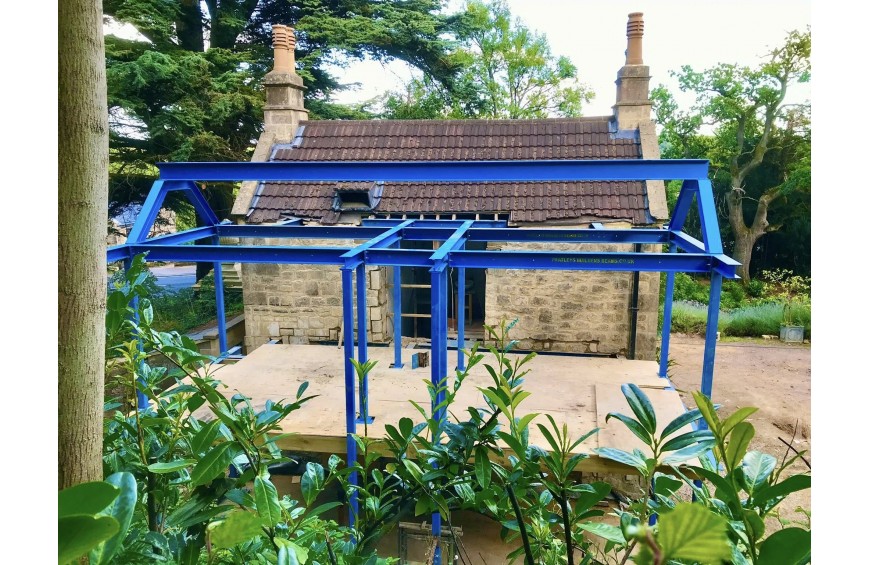
When planning building projects involving structural steelwork, one of the fundamental decisions you'll face is whether to use standard off-the-shelf steel sections or commission custom-fabricated beams tailored to your specific requirements. This choice affects project costs, timelines, structural performance, and overall building efficiency.
This comprehensive guide explains the differences between standard and custom steel beams, helping you understand when each option makes sense and how to work effectively with structural engineers and fabricators to specify the right solution for your project.
Understanding Standard Steel Sections
Standard steel sections are manufactured in set sizes and profiles at steel mills, stocked by distributors, and readily available throughout the UK construction industry.
What Makes a Section "Standard"
Standard sections follow dimensional specifications defined by British and European standards. Universal Beams (UB), Universal Columns (UC), Parallel Flange Channels (PFC), and Structural Hollow Sections (SHS/RHS) all come in defined size ranges that steel mills produce in large quantities.
For example, Universal Beams are available in sizes ranging from 127×76mm (the smallest) to 914×419mm (the largest), with dozens of intermediate sizes. Each size has standardized dimensions for depth, width, flange thickness, web thickness, and weight per meter.
These standardized sections are designed to suit common structural applications. The range of available sizes means most typical loading scenarios can be accommodated using standard sections without custom fabrication.
Steel stockholders maintain inventory of frequently used sizes, allowing fabricators to obtain materials quickly—often within 24-48 hours for common sections. Less common sizes within the standard range may require 3-5 days delivery from distributors.
Benefits of Standard Sections
Cost Efficiency: Standard sections cost significantly less than custom fabrication because they're mass-produced. Mills achieve economies of scale producing thousands of tonnes of standard sizes, keeping prices competitive. You pay only for the steel itself plus basic fabrication charges for cutting to length and drilling connection holes.
Quick Availability: Stock availability means minimal lead times between ordering and delivery. For straightforward projects requiring standard beams cut to length, total lead times of 7-10 working days are typical—sometimes less for simple requirements.
Proven Performance: Standard sections have known, published properties including section modulus, moment of inertia, and load-carrying capacity. Structural engineers can quickly select appropriate sizes from comprehensive tables and design software databases.
Simplified Engineering: Using standard sections streamlines structural calculations and design approval. Building Control officers and checking engineers are familiar with standard sections, facilitating faster approval processes.
Wide Fabricator Capability: Any competent steel fabricator can work with standard sections. You're not limited to specialists with particular equipment or expertise, increasing competition and typically reducing fabrication costs.
Limitations of Standard Sections
While standard sections suit many applications, they have inherent limitations that sometimes necessitate custom solutions.
Fixed Dimensional Ratios: Standard sections have predetermined relationships between depth, width, and thickness. If your project needs a beam that's deeper but not heavier than standard sections provide, or wider flanges without increased depth, standard sections may not offer the ideal solution.
Limited Span Capabilities: For very long spans or heavy loading, standard sections may become uneconomically large. The largest standard beams are heavy, expensive, and difficult to handle. Custom fabricated solutions sometimes provide better span capacity at lower cost.
Connection Limitations: Standard sections have flanges and webs of fixed dimensions that may not accommodate all connection details optimally. Adding brackets, stiffeners, or connection plates requires custom fabrication even when using standard beam sizes.
Architectural Constraints: Building designs with specific dimensional requirements may not align with available standard sizes. Ceiling heights, floor-to-floor dimensions, or architectural features might demand sections that standard ranges don't provide.
Understanding Custom Steel Fabrication
Custom steel fabrication creates structural members specifically designed for your project requirements, going beyond simply cutting standard sections to length.
What Qualifies as Custom Fabrication
Custom fabrication encompasses various approaches to creating non-standard structural members:
Plate Girders: Built-up beams fabricated by welding steel plates together to create I-shaped sections. These can be any depth, width, and thickness that project loading requires, providing complete flexibility.
Modified Standard Sections: Standard beams or columns with additional plates welded to flanges or webs to increase load capacity. This approach is more economical than full plate girders while providing performance beyond standard sections.
Castellated and Cellular Beams: Standard sections cut in zigzag or circular patterns and re-welded to increase depth without adding material. These create efficient long-span beams, though the process requires specialist fabricators.
Box Sections: Custom-welded box shapes providing exceptional torsional stiffness and load capacity for specific applications where standard hollow sections are inadequate.
Tapered Sections: Beams with variable depth along their length, efficiently matching structural requirements where loads vary. Portal frame rafters commonly use this approach.
Complex Assemblies: Integrated structural units combining beams, columns, brackets, and connections into single assemblies fabricated and tested in workshops before delivery.
Benefits of Custom Fabrication
Optimized Performance: Custom sections can be designed precisely for their specific loading conditions, providing exactly the strength and stiffness required without excess material. This optimization can reduce overall steel quantities compared to oversizing standard sections.
Architectural Freedom: Custom fabrication accommodates unusual building dimensions, complex geometries, or aesthetic requirements that standard sections cannot satisfy. This flexibility supports innovative architectural design.
Connection Integration: Brackets, stiffeners, and connection details can be incorporated during fabrication, creating complete assemblies that install quickly on site. This integration reduces site welding and simplifies installation.
Span Extension: Custom fabrication enables longer spans than standard sections economically support. This reduces the number of columns required, creating more open, flexible interior spaces.
Unique Solutions: Some structural situations have no standard solution. Custom fabrication solves these unique challenges, enabling projects that wouldn't be feasible with standard sections alone.
Considerations with Custom Fabrication
Higher Costs: Custom fabrication costs more than using standard sections. Design time, specialized fabrication processes, and custom engineering all add expenses. Expect custom solutions to cost 40-100% more than equivalent standard sections depending on complexity.
Extended Lead Times: Custom fabrication requires additional time for engineering, fabrication, and quality control. Add 2-4 weeks to standard section lead times for custom work, more for particularly complex fabrication.
Specialist Requirements: Not all fabricators have the equipment, expertise, or certifications for complex custom fabrication. You may need to source specialists, potentially limiting competitive pricing options.
Engineering Complexity: Custom sections require detailed structural calculations and may face more scrutiny during Building Control approval. Budget additional engineering time and potential approval delays.
Limited Reversibility: Once custom sections are fabricated, they can't easily be repurposed if project requirements change. Standard sections have residual value and alternative uses; custom fabrication is project-specific.
How to Decide What You Need
Several factors should inform your decision between standard and custom solutions.
Loading Requirements
Your structural engineer calculates loads that steel members must carry—dead loads (permanent building weight), imposed loads (occupancy and equipment), and any special loads (wind, snow, seismic). These calculations determine required structural capacity.
If standard sections can safely carry calculated loads with appropriate safety factors, they're usually the preferred choice. When standard sections would need to be oversized considerably to meet requirements, custom fabrication might provide more economical solutions.
Ask your structural engineer: "Can standard sections handle these loads efficiently, or would custom fabrication provide better value?" Engineers can usually identify situations where custom solutions justify their additional cost.
Span and Spacing
Longer spans between supports generally favor custom fabrication because the efficiency gains of optimized sections offset their higher costs. Short spans (under 5 meters) almost always use standard sections economically. Medium spans (5-8 meters) usually work well with standard sections. Long spans (over 8 meters) increasingly benefit from custom solutions.
Column spacing affects this calculation. Widely spaced columns reduce their quantity but increase beam spans and loads. Finding the optimal balance between column and beam costs often requires evaluating both standard and custom beam options.
Architectural Constraints
Building designs sometimes impose dimensional constraints that standard sections cannot satisfy. Floor-to-floor heights, ceiling clearances, or facade alignments may require specific beam depths unavailable in standard ranges.
If architectural requirements are flexible, adapting designs to accommodate standard sections usually proves most economical. When architectural constraints are fixed—heritage buildings, specific aesthetic goals, or tight urban sites—custom fabrication provides necessary flexibility.
Involve your structural engineer early in design development. They can advise whether proposed architectural dimensions work with standard sections or require custom fabrication, informing design decisions before commitments are made.
Connection Complexity
Simple connections—beams sitting on column flanges, or beam-to-beam connections with standardized brackets—work well with standard sections. Complex connections requiring multiple plates, non-standard angles, or integrated brackets may justify custom fabrication that incorporates connection details.
Custom-fabricated assemblies with integrated connections can reduce site welding, simplify installation, and improve quality control. The workshop fabrication premium may be offset by site labor savings and faster installation.
Project Budget
Budget constraints significantly influence material choices. Standard sections minimize steel costs, making them appropriate for cost-sensitive projects where efficiency matters more than optimization.
When projects have adequate budgets and optimization provides meaningful benefits—reduced building height, fewer columns, improved aesthetics—custom fabrication investments can be justified.
Conduct cost comparisons for your specific project. Request quotations for both standard section solutions and custom alternatives. Include installation costs, not just material prices, as custom fabrication sometimes reduces overall project costs despite higher steel prices.
Timeline Pressures
Tight project schedules favor standard sections with their shorter lead times and simpler approval processes. Custom fabrication's extended timelines can delay entire projects if not planned appropriately.
When timelines are critical, standard sections keep projects moving. When adequate time exists, custom fabrication can be considered without schedule risk.
Working with Structural Engineers
Your structural engineer is essential to making informed decisions about steel specifications. Understanding their role and how to collaborate effectively ensures optimal solutions.
The Engineer's Design Process
Structural engineers begin with architectural layouts and loading assumptions, calculating forces on all structural members. They then select appropriate steel sections satisfying structural requirements while considering cost, availability, and constructability.
Engineers typically try standard sections first, checking whether available sizes handle required loads safely. When standard sections work, they're specified. When standard sections would be inefficient or unavailable, engineers consider custom alternatives.
This iterative process balances structural adequacy, economy, and practical construction considerations. Good engineers don't automatically choose the most sophisticated solution—they find appropriate solutions for each project's specific context.
Questions to Ask Your Engineer
Can standard sections handle these loads efficiently? This fundamental question establishes whether custom fabrication needs consideration.
What would custom fabrication options cost compared to standard sections? Engineers can provide preliminary cost guidance helping you understand whether detailed custom design is worth pursuing.
How do different options affect project timeline? Understanding schedule implications helps prioritize design approaches.
Are there architectural modifications that would allow standard sections? Sometimes minor design adjustments eliminate the need for expensive custom work.
What are the structural benefits of custom fabrication in this situation? Ensuring benefits justify costs prevents over-engineering that wastes money.
Providing Useful Input
Share your priorities clearly with your structural engineer. Budget constraints, timeline pressures, architectural flexibility, and quality expectations all influence what constitutes the "best" solution for your project.
If you have preferences about fabrication approaches, express them. Some clients value simplicity and prefer standard solutions; others prioritize optimization and accept custom fabrication complexity. Your engineer can't read your mind—communicate your preferences explicitly.
Involve your builder in technical discussions. Builders understand practical installation considerations that might favor one approach over another. Their input helps engineers design solutions that work well on site.
Working with Steel Fabricators
Steel fabricators provide valuable technical input that complements structural engineering, particularly regarding fabrication practicality and cost optimization.
When to Involve Fabricators
Engage fabricators early in project planning, particularly for projects where custom fabrication is likely. Fabricators can advise on what's feasible, practical fabrication approaches, realistic lead times, and cost implications before final designs are locked down.
For straightforward projects using standard sections, fabricator involvement can wait until tenders are issued. For complex custom work, early fabricator input prevents designing solutions that are theoretically sound but impractical or excessively expensive to fabricate.
Some projects benefit from "design and build" approaches where fabricators provide complete design and supply packages. These integrated arrangements can optimize solutions but require carefully managed procurement to ensure quality and value.
Questions to Ask Fabricators
Do you routinely fabricate the type of custom work this project requires? Ensure fabricators have appropriate experience and capabilities.
What fabrication approaches would you recommend for this application? Experienced fabricators often suggest practical alternatives that achieve design intent more economically.
What are realistic lead times for this scope? Understanding timelines helps project planning and prevents unrealistic schedule expectations.
What information do you need to provide accurate quotations? Clarifying requirements upfront prevents back-and-forth communication extending procurement timelines.
Can you provide value engineering suggestions? Fabricators sometimes identify material or design modifications that reduce costs without compromising performance.
Comparing Quotations
When soliciting multiple fabrication quotes, ensure all fabricators price the same scope. Variations in assumptions, specifications, or included services make meaningful comparison impossible.
Consider fabricator qualifications and experience alongside price. The cheapest quotation from an inexperienced fabricator may prove more expensive overall when quality issues cause delays or remedial work.
Review what's included versus excluded in quotations. Surface treatments, delivery, material certificates, and inspection costs should all be clearly stated to enable accurate comparison.
Standard Section Solutions for Common Scenarios
Understanding which standard sections suit typical applications helps you recognize when standard solutions are appropriate.
Residential Extensions
Single-storey rear extensions typically use Universal Beams in the 178mm to 254mm depth range. These sections provide adequate strength for typical residential loading while remaining economical and readily available.
Two-storey extensions require larger sections, commonly 305mm to 356mm deep beams depending on span and upper floor loads. Standard sections almost always suffice for residential applications unless unusual spans or loads apply.
Loft conversions often use 178mm to 254mm beams for relatively short spans supporting light residential floor loads. Custom fabrication is rarely justified in domestic loft conversions.
Commercial Office Buildings
Office buildings commonly use 305mm to 457mm beams for typical 6-8 meter spans between columns. Standard sections provide efficient solutions for the moderate loads and regular grid patterns typical in office design.
Larger commercial buildings might incorporate custom fabrication for long-span areas like entrance atriums or open-plan spaces where reducing column quantities justifies additional beam costs.
Industrial and Warehouse Buildings
Portal frame buildings commonly use custom-fabricated tapered rafters optimizing structural efficiency for large clear spans. The weight savings from tapering justify custom fabrication costs for these applications.
Internal mezzanine floors in industrial buildings typically use standard sections for reasonable spans (up to about 8 meters). Longer spans increasingly benefit from custom castellated or cellular beams providing greater depth and load capacity.
Agricultural Buildings
Agricultural structures typically prioritize economy, favoring standard sections wherever possible. Simple portal frames using standard sections work well for many farm buildings.
Large clear spans for machinery storage or livestock housing might justify custom portal frames optimizing material usage for specific building widths.
The Cost-Benefit Analysis
Making informed decisions requires understanding the complete cost picture, not just steel prices in isolation.
Direct Cost Comparison
Standard section costs typically range from £800 to £2,500 per tonne for common sizes including basic fabrication (cutting and drilling). Custom fabrication costs £1,500 to £5,000+ per tonne depending on complexity.
This direct comparison, however, doesn't tell the complete story. Custom fabrication might use less total tonnage, potentially offsetting higher per-tonne costs. A standard 356mm UB might weigh 150kg per meter while a custom plate girder providing equivalent capacity might weigh only 120kg per meter.
Installation Cost Factors
Standard sections with simple connections typically install quickly, minimizing crane time and labor costs. Custom assemblies with integrated connections might install even faster despite their higher material costs.
Consider total installed costs—materials plus labor and equipment—rather than just steel prices. Sometimes paying more for steel reduces overall project costs through faster, simpler installation.
Lifecycle Considerations
Deeper custom sections might provide greater clearance below beams, allowing more efficient building services routing or improved ceiling heights. These functional benefits have value extending throughout the building's life.
Optimized custom sections might reduce structural dead weight, allowing lighter foundations or reducing loads on existing structures in renovation projects. These secondary benefits sometimes justify custom fabrication investments.
Value Engineering
Value engineering systematically examines design decisions to ensure value delivery. For steel selection, this means questioning whether more expensive custom solutions genuinely provide benefits justifying their costs.
Work with your design team to challenge assumptions. Can architectural dimensions adjust slightly to accommodate standard sections? Would modest increases in column quantities eliminate the need for long-span custom beams? Could standard sections with simple reinforcing plates provide adequate capacity more economically than full custom fabrication?
Making the Final Decision
Armed with engineering advice, fabricator input, cost comparisons, and understanding of your project's specific context, you can make informed decisions about steel specifications.
Prioritize Appropriateness Over Sophistication
The "best" solution isn't necessarily the most technically advanced or highly optimized. It's the solution that balances structural adequacy, cost-effectiveness, timeline compatibility, and construction practicality for your specific project.
Standard sections represent appropriate solutions for most typical building situations. Custom fabrication adds value when project circumstances—unusual loads, long spans, architectural constraints, or special requirements—create situations where standard sections are genuinely inadequate or significantly less efficient.
Document Your Decision Process
Record the rationale behind steel specifications. Note what alternatives were considered, why final selections were made, and what factors influenced decisions. This documentation helps justify specifications to Building Control, supports future value engineering reviews, and provides a record if questions arise later.
Remain Flexible Until Necessary
Where possible, maintain flexibility in specifications until project details are finalized. Committing to custom fabrication early may prove unnecessary if subsequent design refinements accommodate standard sections.
Conversely, assuming standard sections will suffice without verification can create problems when detailed engineering reveals their inadequacy. Engage structural engineers early enough to make informed decisions before commitments are made.
Trust Professional Advice
Your structural engineer's recommendations reflect their experience, calculations, and professional judgment. While you should understand their reasoning and question anything unclear, resist the temptation to override engineering advice based on cost considerations alone.
Similarly, experienced fabricators offer valuable practical insights about what works well in fabrication and installation. Their suggestions merit serious consideration even when they differ from initial assumptions.
Conclusion
Choosing between standard and custom steel sections requires balancing multiple factors including structural requirements, costs, timelines, architectural constraints, and construction practicality. Standard sections provide economical, readily available solutions for most typical applications, while custom fabrication offers optimized performance and flexibility for situations where standard sections are inadequate or inefficient.
Work closely with your structural engineer to understand loading requirements and evaluate whether standard sections meet project needs efficiently. Engage fabricators early when custom work is likely, benefiting from their practical experience and realistic cost guidance. Consider total project costs including installation, not just steel prices in isolation.
For most residential extensions, commercial fit-outs, and typical building projects, standard sections provide appropriate, cost-effective solutions. Custom fabrication adds value primarily for long spans, heavy loads, unusual geometries, or projects where optimization benefits justify additional costs and complexity.
The decision ultimately depends on your specific project circumstances. By understanding the differences between standard and custom options, asking informed questions of your design team and fabricators, and carefully evaluating costs against benefits, you can specify steel solutions that deliver the structural performance your project requires at appropriate cost and within realistic timelines.

Submit comment Cancel Reply